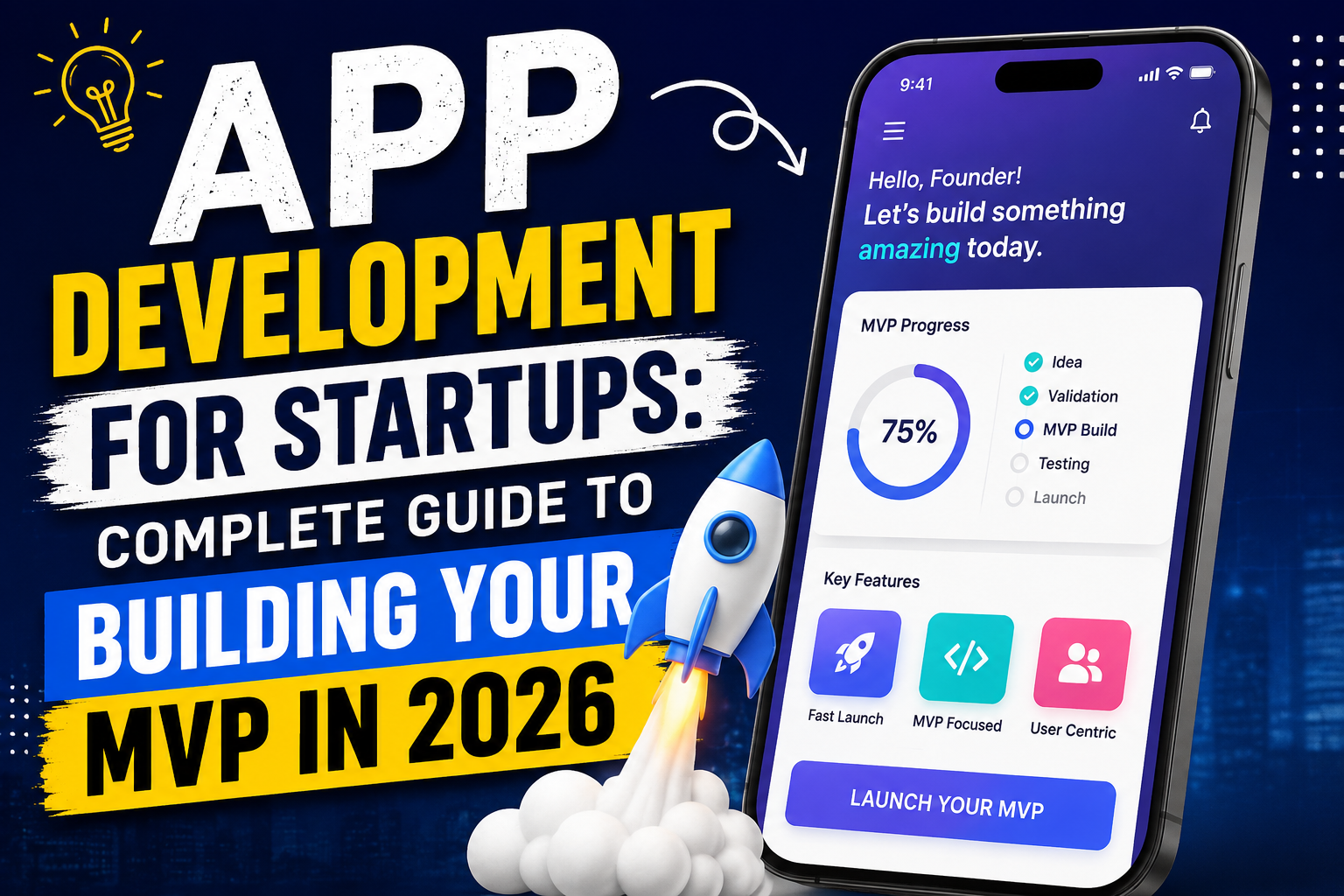
App development for startups requires speed to market, capital efficiency, and the ability to pivot based on user feedback. Building the wrong product perfectly is the most costly startup failure — which is why MVP methodology, lean development, and iterative user testing are essential for startup app development success in 2026.
This comprehensive guide covers the key aspects of app development for startups — from understanding the landscape and evaluating top platforms, to implementation best practices, pricing models, and measuring return on investment. Whether you are exploring app development for startups for the first time or upgrading from a legacy solution, this guide will help you make a confident, data-driven decision.
Understanding App Development For Startups
App development for startups requires speed to market, capital efficiency, and the ability to pivot based on user feedback. Building the wrong product perfectly is the most costly startup failure — which is why MVP methodology, lean development, and iterative user testing are essential for startup app development success in 2026.
The app development for startups landscape in 2026 is characterised by rapid innovation, increased AI integration, and broader accessibility for businesses of all sizes. Cloud-based delivery has eliminated most of the infrastructure barriers that previously limited access to enterprise-grade capabilities. Understanding the current state of the market — leading platforms, key differentiating features, and typical implementation challenges — is the essential starting point for making an informed technology decision.
Key Benefits
Businesses implementing app development for startups solutions consistently report improvements in operational efficiency, team productivity, data quality, and customer experience. The most commonly cited benefits include: significant time savings through task automation, improved data visibility enabling better business decisions, enhanced team collaboration through centralised information, and measurable improvements in core KPIs. ROI calculations for app development for startups investments typically show payback within 6-18 months for well-implemented solutions with strong user adoption.
How to Choose the Right Solution
Not all app development for startups solutions are equal. The market spans free entry-level tools to enterprise platforms costing hundreds of thousands annually. The right choice depends on your organisation size, specific workflow requirements, existing technology stack, team technical expertise, and long-term growth plans. Use a systematic evaluation process: document requirements, shortlist 3-5 platforms, conduct hands-on trials with real use cases, speak with reference customers, and calculate total cost of ownership over a 3-5 year horizon.
Top Platforms and Features for 2026
The leading app development for startups platforms in 2026 offer compelling capabilities across all price tiers. Enterprise solutions provide comprehensive features, proven scalability, extensive integration ecosystems, and dedicated support — suitable for large organisations with complex requirements. Mid-market platforms offer the best features-to-cost ratio for growing businesses, typically delivering 80-90% of enterprise functionality at 30-50% of the cost. Entry-level and free options serve small businesses and teams getting started without significant upfront investment.
When evaluating app development for startups platforms, prioritise features addressing your highest-priority pain points rather than impressive capabilities you are unlikely to use. Request demonstrations focused on your specific workflows, not generic product tours. Evaluate vendor financial stability, customer support responsiveness, and product roadmap alignment with your requirements. User reviews from similar organisations on G2, Capterra, and Gartner Peer Insights provide independent perspectives that balance vendor marketing claims effectively.
Implementation Best Practices
Successful app development for startups implementation follows a structured process: requirements documentation, platform selection, data migration planning, system configuration, user training, phased rollout, and post-launch optimisation. The most common implementation mistakes are rushing requirements definition, underestimating data migration complexity, insufficient training investment, and treating go-live as the end of the project rather than the beginning of an ongoing optimisation programme.
Change management is as important as technical execution. Users who understand why the new system is better and receive role-specific, workflow-focused training adopt new tools far more readily than those receiving generic product demonstrations. Identify internal champions — respected team members who embrace the system early and help colleagues through the transition. Establish clear adoption expectations and accountability from leadership, and measure adoption metrics weekly during the first 90 days post-launch.
Pricing Models and ROI Measurement
Pricing for app development for startups solutions varies by tier, user count, feature set, and deployment model. Entry-level options range from free to $50/user/month. Mid-market solutions typically cost $50-200/user/month. Enterprise platforms range from $200-500+/user/month for full feature sets. Annual billing typically achieves 15-25% savings over monthly. Multi-year commitments unlock further discounts. Always calculate total cost of ownership — including implementation, training, and administration — not just licensing fees.
ROI measurement should track both hard cost savings (automation reducing labour costs, eliminated legacy systems, avoided hiring) and revenue impact (improved conversion rates, shorter sales cycles, higher customer retention, more referrals). Most organisations achieve positive ROI from well-implemented app development for startups solutions within 6-12 months. Pre-implementation baseline measurement and quarterly post-implementation tracking ensures the investment delivers expected returns and highlights further optimisation opportunities.
AI Capabilities and 2026 Trends
Artificial intelligence is transforming app development for startups in 2026. AI-powered features including predictive analytics, automated content generation, intelligent workflow recommendations, and natural language interfaces are becoming standard across mid-market and enterprise platforms. These capabilities deliver significant productivity improvements — reducing manual effort for routine tasks and surfacing actionable insights from data that would previously require dedicated analytical resources.
The app development for startups category will continue evolving toward greater intelligence, automation, and cross-platform integration. Platforms investing heavily in AI today are building competitive advantages that compound over time. When evaluating solutions, assess the vendor’s AI roadmap alongside current capabilities. Platforms with strong AI investment programmes deliver increasingly better value throughout the contract term compared to those with static feature development.
Frequently Asked Questions
What is app development for startups?
App Development For Startups refers to specialised software solutions designed to improve specific business operations and outcomes. In 2026, these solutions leverage cloud infrastructure, artificial intelligence, and open integration standards to deliver capabilities previously accessible only to large enterprises — now available to businesses of all sizes at competitive price points.
How much does app development for startups cost?
Pricing varies significantly by platform tier and scale. Entry-level solutions range from free to $50/user/month. Mid-market options typically cost $50-200/user/month. Enterprise platforms are custom-priced, commonly $200-500+/user/month for full capabilities. Most vendors offer 14-30 day free trials and annual billing discounts of 15-25%.
How long does implementing app development for startups take?
Implementation timelines depend on scope and complexity. Simple deployments for small teams: 2-4 weeks. Mid-market implementations with data migration and integrations: 4-12 weeks. Enterprise deployments with customisation and extensive integrations: 3-9 months. Cloud SaaS platforms deploy significantly faster than on-premises alternatives.
What ROI can I expect from app developments for startups?
Most organisations report positive ROI from app development for startups investments within 6-18 months. Key ROI drivers include productivity improvements from automation, better conversion rates from improved data quality, cost savings from eliminated legacy systems, and revenue improvements from faster, more consistent processes. Quantify expected benefits before implementation to build a strong business case and establish measurable success criteria.
Conclusion
App Developments for Startups offers significant competitive advantages for businesses that invest thoughtfully in evaluation, implementation, and adoption. By selecting a platform aligned with your specific requirements, committing to proper configuration and user training, and measuring outcomes rigorously, you build capabilities that compound into lasting business value.
Ready to transform your business? Explore VBWebSol’s App Development Services or contact our team for a free consultation. With over 12 years of IT expertise, we deliver solutions that drive real business results.