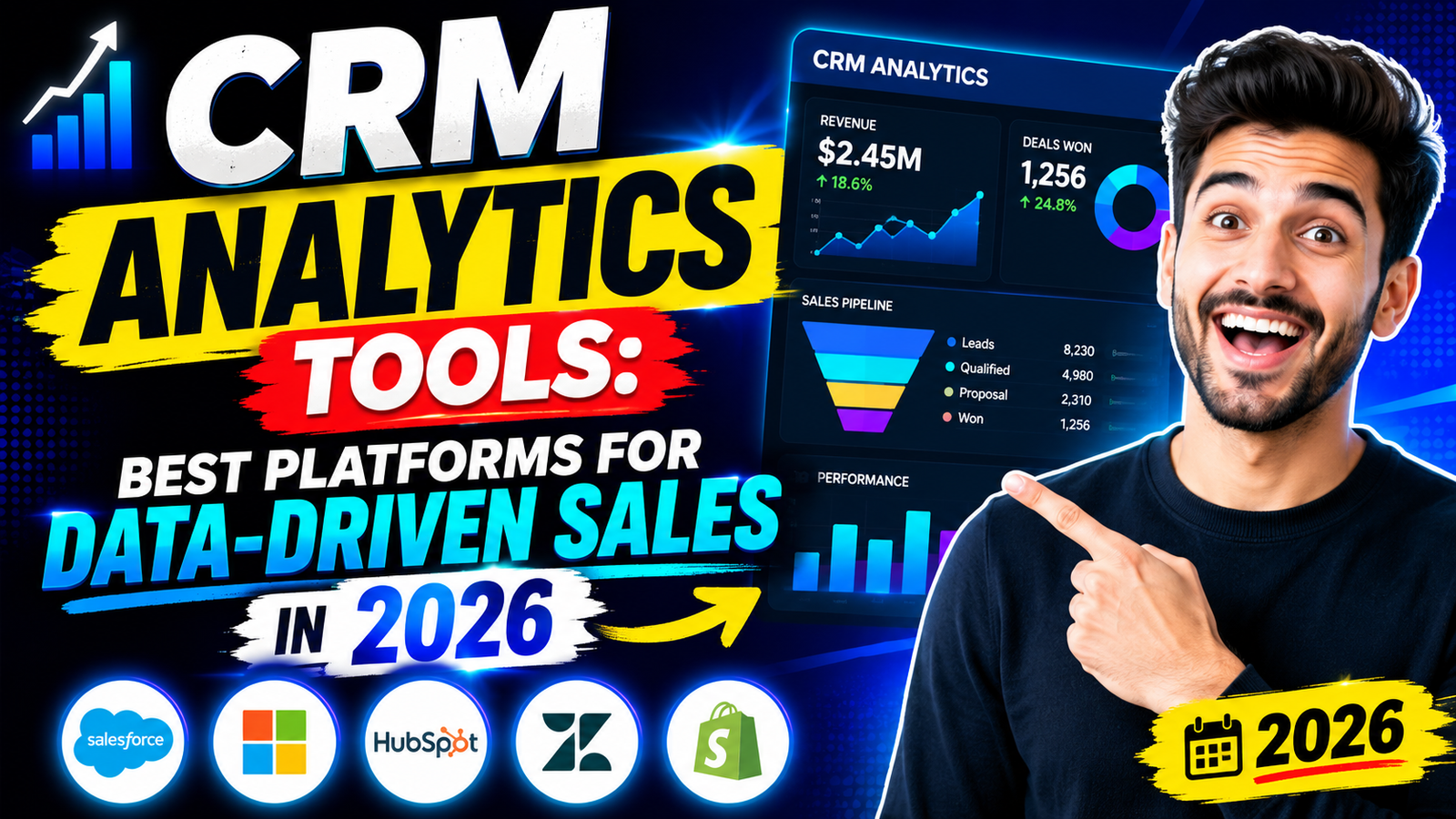
Modern sales and marketing teams are drowning in data but starving for insights. CRM analytics tools transform raw customer relationship data into actionable intelligence—helping businesses understand pipeline health, forecast revenue accurately, identify at-risk customers, and optimize sales performance at every level.
In this guide, we explore what CRM analytics tools are, what features matter most, and which platforms lead the market in 2026.
What Are CRM Analytics Tools?
CRM analytics tools are software platforms or features within CRM systems that analyze customer relationship data to generate insights, reports, and visualizations. They cover a range of analytical capabilities from basic sales reporting to AI-powered predictive forecasting and customer behavior modeling.
Types of CRM Analytics
Descriptive Analytics
Answers the question: “What happened?” Includes historical reporting on sales performance, deal close rates, campaign results, and customer behavior. Most CRMs include basic descriptive analytics out of the box.
Diagnostic Analytics
Answers: “Why did it happen?” Diagnostic analytics identify root causes—why deals are lost at a particular pipeline stage, why customer churn spikes in Q4, or which sales reps consistently underperform.
Predictive Analytics
Answers: “What will happen?” Predictive CRM analytics use machine learning to forecast revenue, predict deal close probability, identify leads likely to convert, and flag customers at risk of churning.
Prescriptive Analytics
Answers: “What should we do?” The most advanced form of CRM analytics recommends specific actions—which leads to contact next, what offer to make, or when to follow up for maximum conversion probability.
Key Features to Look for in CRM Analytics Tools
Sales Pipeline Analytics
Visualize pipeline health across stages, track deal velocity, identify bottlenecks, and monitor pipeline coverage ratios. Essential for sales managers and VPs of Sales.
Revenue Forecasting
AI-powered forecasting that analyzes historical data, pipeline activity, and deal signals to predict monthly, quarterly, and annual revenue with accuracy metrics.
Activity Analytics
Track sales activities—calls, emails, meetings—and correlate them with outcomes to identify which activities drive the highest win rates.
Customer Segmentation
Segment customers by behavior, demographics, purchase patterns, or lifecycle stage to identify your most valuable segments and tailor engagement strategies.
Churn Prediction
Machine learning models that score existing customers on churn probability, enabling proactive retention efforts before customers decide to leave.
Campaign Attribution
Connect marketing campaign data with sales outcomes to understand which campaigns generate the highest quality leads and best ROI.
Custom Dashboards and Reports
Drag-and-drop dashboard builders that let sales reps, managers, and executives create the views they need without relying on IT or data teams.
Best CRM Analytics Tools and Platforms in 2026
Salesforce Analytics (Einstein Analytics / Tableau CRM)
Salesforce’s Einstein Analytics, powered by Tableau, is among the most powerful CRM analytics platforms available. It offers AI-powered predictions, custom dashboards, and the ability to blend CRM data with external data sources for comprehensive analysis.
HubSpot Reporting and Analytics
HubSpot provides robust built-in analytics covering sales, marketing, and service performance. Its custom report builder, attribution reports, and revenue analytics dashboards make it an excellent choice for SMBs and mid-market companies.
Zoho Analytics (Zoho CRM)
Zoho Analytics integrates deeply with Zoho CRM to provide advanced reporting, AI-powered insights (Zia), and cross-functional dashboards. It supports data blending from external sources and real-time collaboration on reports.
Microsoft Dynamics 365 + Power BI
The combination of Dynamics 365 CRM data with Power BI’s visualization engine creates exceptionally powerful analytics. Power BI’s embedded dashboards within Dynamics 365 provide a seamless analytical experience for Microsoft-ecosystem companies.
Pipedrive Insights
Pipedrive’s built-in Insights feature delivers deal analytics, activity reports, and forecasting in a clean, easy-to-use interface. Ideal for SMBs and sales teams that want powerful analytics without complexity.
Clari
Clari is a standalone revenue operations platform built specifically for sales forecasting and pipeline analytics. It integrates with any CRM to provide AI-powered deal intelligence, rep coaching insights, and board-level revenue visibility.
Gong
Gong analyzes sales conversations (calls, emails, video meetings) and surfaces insights within your CRM about deal health, competitor mentions, and buyer sentiment—giving a unique conversational intelligence layer on top of standard CRM analytics.
How to Implement CRM Analytics Effectively
Start with Clean Data
Analytics are only as good as the underlying data. Before investing in advanced analytics tools, audit your CRM data quality—identify duplicates, missing fields, and inconsistent data entry practices.
Define Your KPIs
Identify the 5–10 metrics that matter most to your business (win rate, average deal value, sales cycle length, pipeline coverage, churn rate) and build your analytics around tracking those metrics consistently.
Create Role-Based Dashboards
Sales reps need different views than sales managers, who need different views than executives. Create role-based dashboards that give each level of the organization the specific insights they need.
Establish Reporting Cadences
Weekly pipeline reviews, monthly forecast calls, and quarterly business reviews should each have dedicated analytics dashboards and reports that get automatically refreshed and distributed.
Related Resources
Frequently Asked Questions
What are CRM analytics tools?
CRM analytics tools are software features or platforms that analyze customer relationship management data to generate sales insights, revenue forecasts, customer behavior models, and performance reports. They range from basic built-in CRM dashboards to standalone AI-powered platforms that integrate with CRM systems.
What metrics should CRM analytics track?
Key CRM analytics metrics include win rate, average deal size, sales cycle length, pipeline coverage ratio, lead conversion rate, customer acquisition cost (CAC), customer lifetime value (CLV), churn rate, and activity-to-outcome ratios (calls per deal, emails per close).
Which CRM has the best analytics?
Salesforce with Einstein Analytics (Tableau CRM) offers the most powerful enterprise-grade CRM analytics. For SMBs, HubSpot and Pipedrive provide excellent built-in analytics. For standalone revenue forecasting, Clari leads the market in AI-powered pipeline intelligence.
Can CRM analytics predict which deals will close?
Yes—AI-powered CRM analytics platforms like Salesforce Einstein, Clari, and HubSpot can predict deal close probability based on engagement patterns, historical data, and deal characteristics. These predictions help sales teams focus on the opportunities most likely to convert.
Conclusion
The right CRM analytics tools transform your sales organization from reactive to proactive—enabling data-driven decisions that consistently improve win rates, shorten sales cycles, and grow revenue.
Want to build a CRM with advanced analytics tailored to your business? Explore VBWebSol’s custom CRM development or contact us for a free consultation.