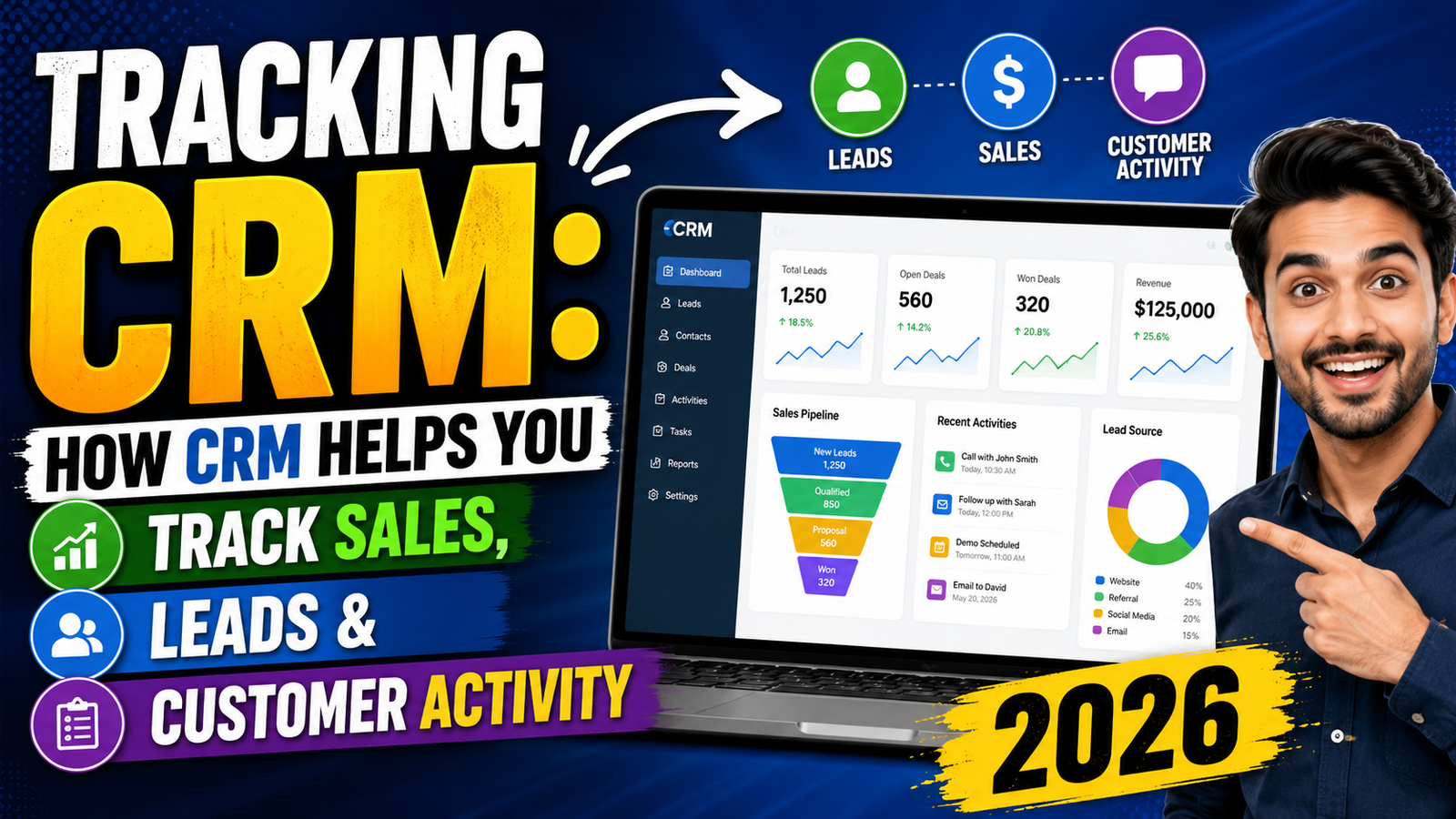
A tracking CRM is more than a contact database—it’s a comprehensive system for monitoring every touchpoint in your customer relationships, from the first website visit to the closed deal and beyond. Understanding what CRM tracking encompasses and how to leverage it gives sales managers and business owners the visibility they need to optimize performance and grow revenue predictably.
What Does a Tracking CRM Monitor?
Lead Tracking
Monitor every lead from capture through the sales funnel. Track lead source (how they found you), first contact date, engagement history, qualification status, and conversion outcome. Lead tracking answers: Where do our best customers come from? What’s our lead-to-customer conversion rate?
Sales Activity Tracking
Log every sales activity—calls made, emails sent, meetings held, proposals submitted. CRM activity tracking gives managers visibility into team productivity and helps identify whether deal outcomes correlate with specific activity patterns.
Deal and Pipeline Tracking
Track every opportunity through your sales pipeline with deal value, stage, expected close date, and probability. Pipeline tracking enables accurate revenue forecasting and early identification of stalled deals that need intervention.
Email Tracking
Track when prospects open emails and click links within them. Email engagement signals tell reps when a prospect is actively considering your offer—the optimal moment for a follow-up call.
Website Behavior Tracking
Advanced CRMs integrate with website analytics to track which pages known contacts visit, what content they engage with, and when they return to your site—triggering alerts when high-interest behavior signals buying intent.
Customer Health Tracking
Post-sale, CRM tracks customer health indicators: product usage, support ticket volume, NPS scores, renewal dates, and engagement metrics. Health scores predict churn risk before it becomes a reality.
Key CRM Tracking Features
Activity Timeline
A chronological log of every interaction with a contact or company—emails, calls, meetings, notes, and system events—giving any team member instant context for every relationship.
Deal Stage Tracking
Visualize every deal’s current stage and track velocity (time in each stage) to identify where deals typically stall or accelerate.
Automated Activity Capture
Automatically log emails, calendar meetings, and calls without manual entry—ensuring complete records even when reps forget to log activities.
Notifications and Alerts
Receive alerts when tracked emails are opened, when a deal hasn’t moved in X days, or when a contact visits your pricing page—enabling timely, relevant follow-up.
Reporting Dashboards
Aggregate tracking data into visual dashboards showing pipeline health, team activity, lead source performance, and revenue trends.
Best CRM Platforms for Tracking in 2026
HubSpot CRM: Industry-leading email tracking, deal pipeline tracking, and website behavior tracking (with HubSpot Marketing)—all available on the free plan.
Salesforce: Enterprise-grade activity tracking with Einstein AI analyzing patterns to predict deal outcomes.
Pipedrive: Excellent deal and activity tracking with visual pipeline and smart reminders.
Close CRM: Superior communication tracking for inside sales teams—call logs, email sequences, and SMS all tracked in a unified timeline.
FAQ
What is a tracking CRM?
A tracking CRM is a customer relationship management system that monitors and logs all touchpoints in customer and prospect relationships—including lead activity, email engagement, sales activities, deal pipeline progress, and customer health metrics—giving businesses complete visibility into their sales and customer management performance.
How does CRM email tracking work?
CRM email tracking embeds a tiny invisible pixel in sent emails. When the recipient opens the email, the pixel loads and reports back to the CRM with the open time and location. Click tracking uses unique links to detect when recipients click email content. These events are logged in the CRM against the contact record.
What are the benefits of CRM deal tracking?
CRM deal tracking provides pipeline visibility for revenue forecasting, early warning on stalled deals, data-driven identification of deal velocity patterns, and manager visibility into team performance—enabling coaching interventions before deals are lost.
Can CRM track customer behavior on my website?
Yes—CRMs like HubSpot with integrated marketing platforms can track known contacts’ website behavior. When a contact in your CRM visits your website, their page views and session data are logged against their CRM record. This enables behavioral triggers like “notify sales rep when contact visits pricing page.”
Conclusion
A tracking CRM transforms invisible customer interactions into visible, actionable intelligence—enabling sales teams to follow up at the right moment, managers to coach based on data, and executives to forecast revenue with confidence.