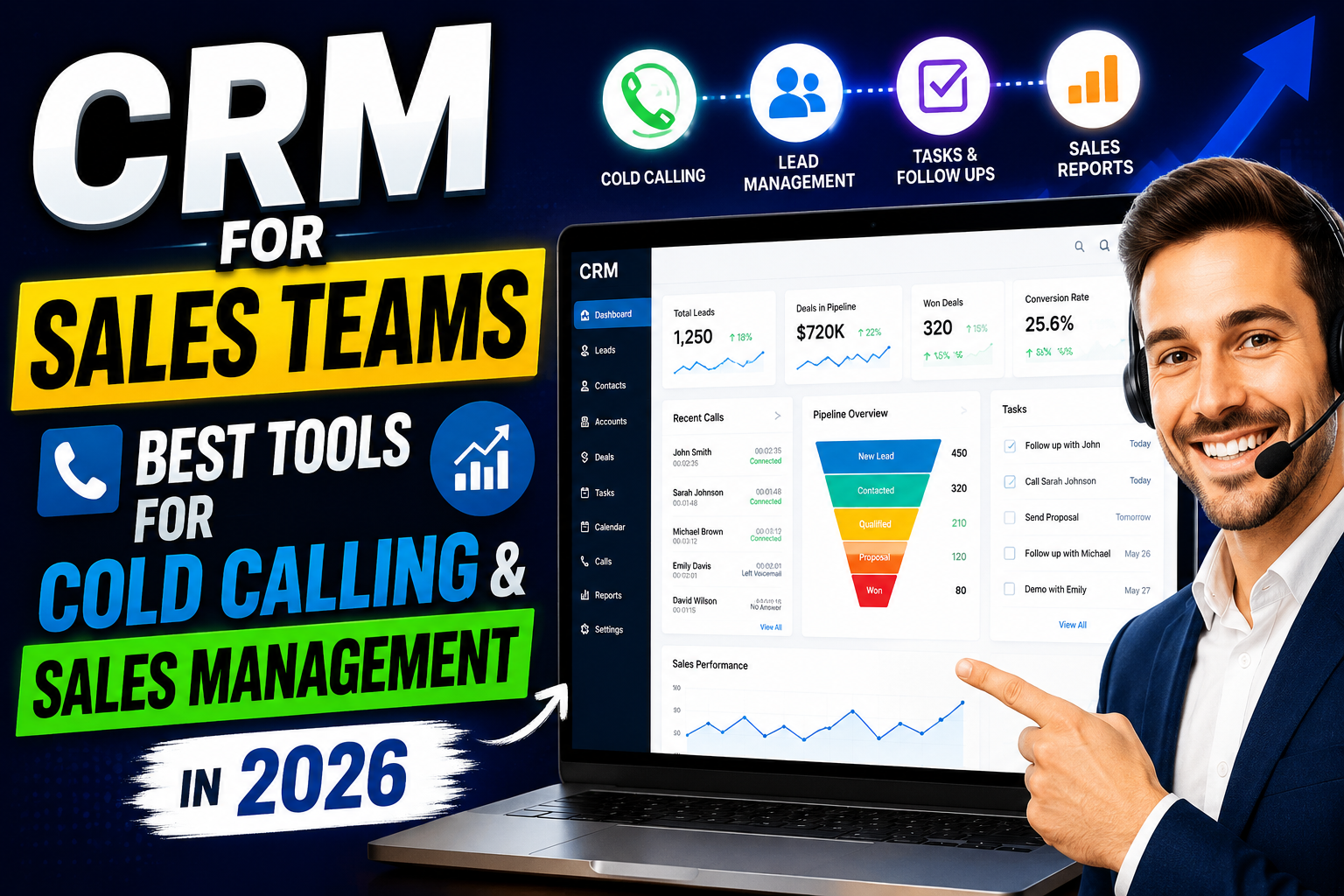
Sales teams are only as effective as their tools. A powerful CRM for sales teams centralizes prospect and customer data, automates follow-up tasks, tracks pipeline health, and enables the kind of organized, data-driven selling that consistently outperforms intuition-based approaches.
Whether your team focuses on outbound cold calling, inbound lead management, or account-based selling, this guide will help you find the right CRM to match your sales motion in 2026.
What Should a Sales CRM Do?
A CRM designed for sales teams should do more than store contacts. The best CRM for sales teams should:
- Provide a visual pipeline so reps and managers can see deal health at a glance
- Log all sales activities automatically—calls, emails, meetings
- Remind reps of follow-up tasks and next steps
- Enable personalized outreach at scale through email sequences and templates
- Integrate with calling tools for efficient CRM for cold calling workflows
- Give managers real-time visibility into team performance
- Provide accurate revenue forecasting based on pipeline data
CRM for Cold Calling: What to Look For
Cold calling remains one of the highest-converting outbound sales activities when executed well. A CRM for cold calling should include:
Built-In or Integrated Dialer
Click-to-call functionality eliminates manual dialing. Look for CRMs with native dialers or tight integrations with tools like Aircall, Kixie, RingCentral, or Twilio.
Call Logging and Recording
Automatically log call duration, outcome, and notes. Call recording supports rep coaching and compliance requirements.
Call Queue and Power Dialer
Power dialers let reps work through prioritized call lists without stopping to manually dial each contact. This significantly increases daily call volume.
Voicemail Drop
Pre-recorded voicemail messages can be dropped with one click when reaching an answering machine—saving 30–60 seconds per voicemail across hundreds of daily calls.
Local Presence Dialing
Display a local area code when calling prospects to increase answer rates—studies show local numbers achieve 4x higher answer rates than out-of-state numbers.
Top CRM Platforms for Sales Teams in 2026
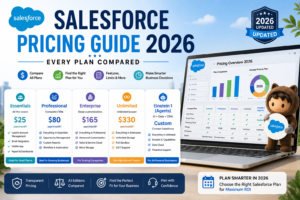
Salesforce Sales Cloud
The enterprise standard for sales teams. Salesforce offers unmatched customization, AI-powered insights via Einstein, and a vast ecosystem of integrations. Best for enterprise sales organizations with complex processes and large teams.
HubSpot Sales Hub
HubSpot is the leading choice for mid-market sales teams. Its free CRM provides an excellent foundation, while Sales Hub’s sequences, calling, and deal management tools scale well for growing teams. The unified Marketing + Sales + Service platform is a significant advantage.
Pipedrive
Pipedrive is built by salespeople for salespeople. Its visual deal pipeline, activity-based selling methodology, and smart reminders make it one of the easiest CRMs for sales reps to adopt and use daily. Excellent for SMBs.
Close CRM
Close is specifically designed for inside sales and cold calling teams. It includes a built-in power dialer, SMS, email sequences, and calling—making it one of the best CRM for cold calling options available. Ideal for SDR-heavy teams.
Freshsales
Freshsales by Freshworks offers AI-powered lead scoring, built-in phone, email sequencing, and a clean interface. Its Freddy AI assistant provides deal insights and next-action recommendations at an affordable price.
Apollo.io
Apollo combines a B2B contact database with a CRM and sales engagement platform. For teams focused on outbound prospecting and cold calling, Apollo’s contact enrichment, email sequences, and dialer make it a compelling all-in-one solution.
Zoho CRM
Zoho CRM offers excellent value with strong pipeline management, AI-powered scoring (Zia), telephony integrations, and workflow automation at a lower price point than most competitors.
Key Features Comparison for Sales CRMs
| Platform | Built-in Dialer | Email Sequences | AI Scoring | Best For |
|---|---|---|---|---|
| Salesforce | Via add-on | Yes (Einstein) | Yes | Enterprise |
| HubSpot | Yes | Yes | Yes | Mid-market |
| Pipedrive | Via integration | Yes | Limited | SMB |
| Close CRM | Yes (native) | Yes | No | Inside sales |
| Freshsales | Yes | Yes | Yes (Freddy) | SMB/Mid-market |
Implementing a Sales CRM Successfully
Get Rep Buy-In First
Sales reps who see the CRM as administrative overhead will avoid using it. Involve reps in the selection process and demonstrate how the tool saves time on follow-ups and prospecting rather than adding data entry.
Define Your Sales Process
Before configuring your CRM, document your sales stages, qualification criteria, and activity cadence. Build your CRM to reflect your actual process—not a generic default configuration.
Integrate Your Communication Tools
Connect your CRM with email, phone, and calendar to ensure activities are logged automatically rather than relying on manual data entry.
Set Up Dashboards and Reporting from Day One
Configure pipeline dashboards, activity reports, and forecast models before launch so managers have visibility from the first week of use.
Related Resources
Frequently Asked Questions
What is the best CRM for sales teams?
The best CRM for sales teams depends on team size and sales motion. HubSpot Sales Hub is excellent for mid-market teams needing marketing and sales alignment. Pipedrive is the top choice for SMBs focused on pipeline management. Close CRM leads for inside sales and cold calling teams. Salesforce is the enterprise standard for large, complex organizations.
What CRM is best for cold calling?
Close CRM is purpose-built for cold calling with its native power dialer, voicemail drop, and calling sequences. HubSpot with Aircall integration and Apollo.io with its built-in dialer are also strong contenders for outbound calling-focused sales teams.
Does a CRM improve sales performance?
Yes—companies using CRM software report average sales improvements of 29% in sales, 34% in sales productivity, and 42% in forecast accuracy according to industry research. The key driver is consistency: CRM ensures every lead is followed up, every promise is kept, and every opportunity is tracked.
How do I choose a CRM for my sales team?
Evaluate CRMs based on your team’s size, primary sales motion (inbound vs. outbound), required integrations (dialer, email, calendar), budget, and technical resources. Start with a free trial involving actual sales reps, and prioritize platforms that your team will genuinely adopt and use daily.
Conclusion
The right CRM for sales teams isn’t just a database—it’s a performance platform that helps reps sell more, managers coach better, and executives forecast accurately. Whether you need a cold calling powerhouse or a comprehensive deal management platform, there’s a CRM built for your sales motion.
Want a custom CRM designed around your sales team’s exact workflow? Explore VBWebSol’s CRM solutions or contact us for a free consultation.