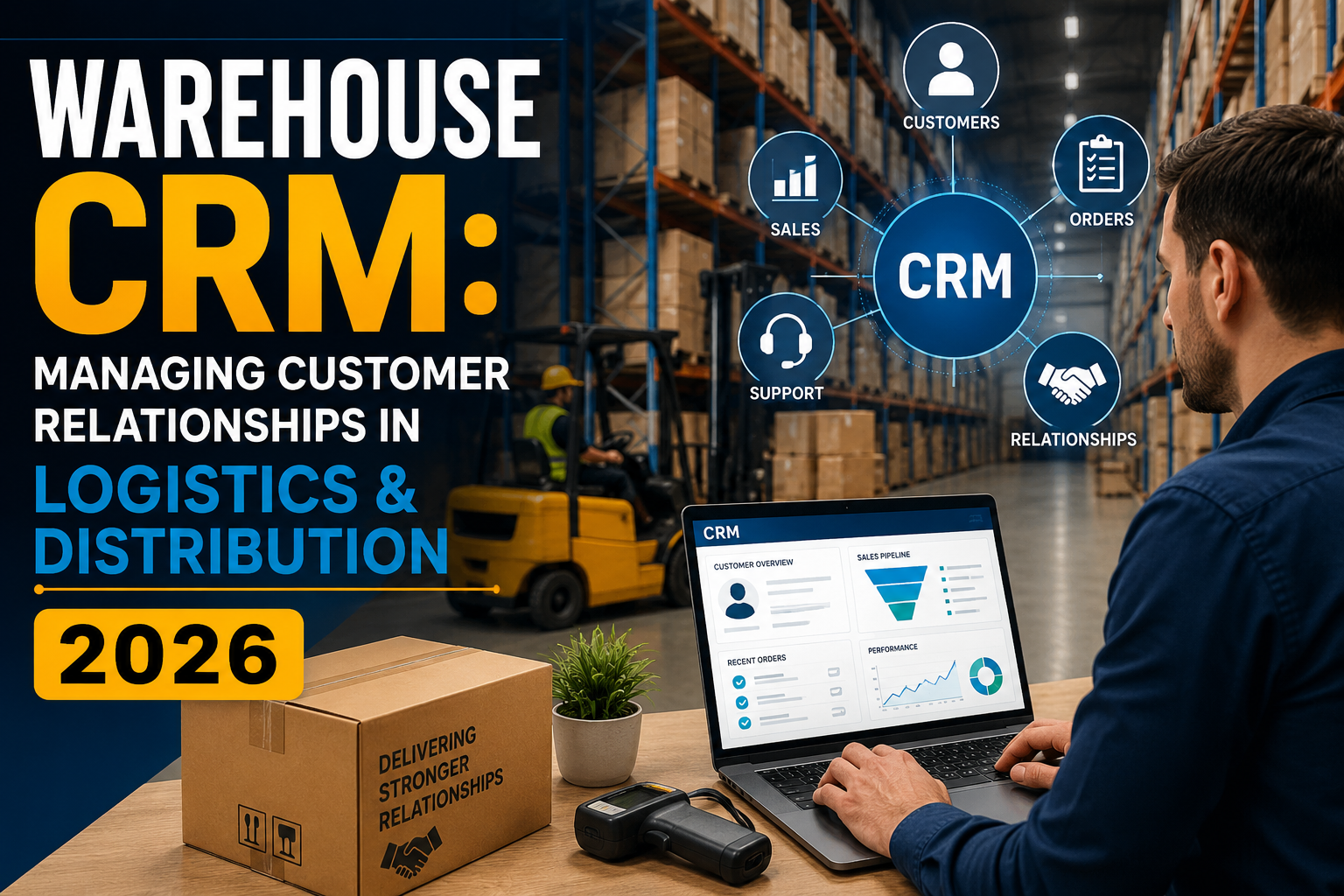
Warehousing and distribution companies manage complex, high-volume relationships with shippers, retailers, manufacturers, and logistics partners. A warehouse CRM integrates customer relationship management with the operational realities of warehouse and distribution business—connecting client accounts, order history, contracts, and service performance in one system.
What Is a Warehouse CRM?
A warehouse CRM is a customer relationship management system configured or built for warehousing, 3PL (third-party logistics), and distribution businesses. Unlike retail or service industry CRMs, a warehouse CRM must link customer records to inventory data, shipping records, service level agreements (SLAs), and operational performance metrics.
Key CRM Needs for Warehousing & Distribution
Client Account Management
Maintain comprehensive records for every client—contract terms, SLAs, dedicated storage allocations, special handling requirements, billing preferences, and key contacts at every level of the client organization.
Order and Shipment History
Link client records to their complete order and shipment history—volumes, SKUs, special services used, on-time delivery performance, and claims history. This context is essential for account review meetings and contract renewals.
SLA and Performance Tracking
Track service level performance for each client against contracted SLAs—order accuracy, on-time dispatch rate, damage rate. Alert account managers when a client’s service metrics are declining before it becomes a relationship issue.
Contract and Rate Management
Store client contracts, rate sheets, and amendment history. Alert managers when contracts approach renewal dates and provide the performance data needed for renewal negotiations.
Client Communication Logging
Log all client communications—issue escalations, rate negotiations, onboarding conversations, and regular account reviews—against the client record for complete relationship history.
Business Development Pipeline
Track new client prospects through a sales pipeline from initial contact through RFP, proposal, contract award, and onboarding. Monitor the value of potential new business in the pipeline.
Warehouse CRM Integration Points
An effective warehouse CRM integrates with:
- Warehouse Management System (WMS): Order data, inventory levels, and fulfillment performance flow from WMS to CRM
- TMS (Transportation Management System): Shipping status, carrier performance, and delivery confirmation
- ERP: Billing, invoicing, and accounts receivable status visible alongside CRM client records
- EDI platform: Electronic order receipt confirmation and ASN data linked to client records
Best CRM Options for Warehousing & Distribution
Salesforce with Logistics Customization
Large 3PL and logistics companies often use Salesforce customized for their industry—with custom objects for shipments, SLAs, and rate cards alongside standard CRM functionality. Maximum flexibility at enterprise cost.
HubSpot CRM
For warehousing companies focused on growing their client base, HubSpot provides strong business development CRM with marketing automation for prospect nurturing. Custom properties and pipelines can be configured for logistics-specific workflows.
Custom Warehouse CRM
Companies with proprietary WMS platforms or specific integration requirements often achieve the best results with a custom-built warehouse CRM that integrates natively with their WMS and ERP systems.
FAQ
What is a warehouse CRM?
A warehouse CRM is a customer relationship management system designed for warehousing, 3PL, and distribution businesses. It connects client account management with operational data—order history, SLA performance, and service metrics—giving account managers and business development teams complete visibility into every client relationship.
How does CRM help warehouse businesses?
CRM helps warehouse businesses by centralizing client account information, tracking SLA performance against contractual commitments, managing contract renewals proactively, logging all client communications in one place, and providing the pipeline visibility needed to forecast new business revenue.
Does a warehouse CRM need to integrate with WMS?
For maximum value, yes—WMS integration allows order volume, fulfillment accuracy, and delivery performance data to flow automatically into client CRM records. This gives account managers real-time performance context without manual data pulling from separate systems.
What is the best CRM for a 3PL business?
Large 3PLs typically use customized Salesforce for its flexibility and enterprise integration capabilities. Mid-size 3PLs often find HubSpot CRM or a custom CRM solution provides better value. The best choice depends on existing technology stack, integration requirements, and team size.
Conclusion
A warehouse CRM bridges the gap between operational performance and customer relationship management—giving logistics businesses the complete client visibility needed to retain accounts, renew contracts, and grow revenue systematically.