CRM as a Service (CRMaaS) is the delivery model that has made enterprise-grade customer relationship management accessible to businesses of all sizes. By delivering CRM capabilities through the cloud as a subscription service — eliminating the infrastructure investment, IT overhead, and upfront licensing costs of traditional on-premises CRM — CRMaaS has transformed CRM from an enterprise-only technology into a tool that benefits every organisation managing customer relationships.
In 2026, virtually all new CRM deployments adopt the SaaS delivery model. This guide explains what CRM as a service means in practice, the benefits it delivers over on-premises alternatives, the leading platforms available at every price point, and how to choose the right CRMaaS solution for your specific business requirements.
What Is CRM as a Service?
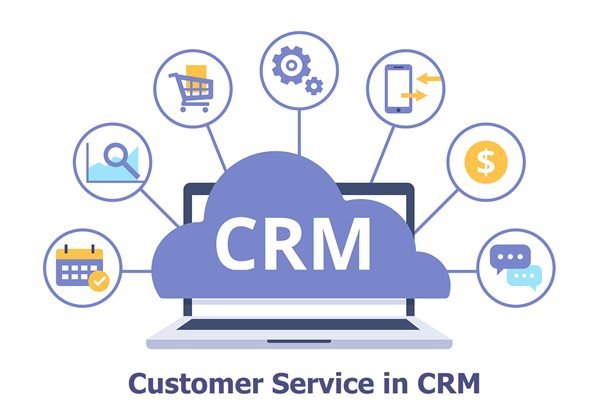
CRM as a Service refers to cloud-based CRM software delivered through a subscription model — accessible through a web browser or mobile app, hosted and maintained by the vendor, and billed monthly or annually per user. Salesforce pioneered this model in 1999 with its now-famous ‘no software’ positioning, demonstrating that enterprise CRM capabilities could be delivered entirely through the internet without on-premises infrastructure. Today, CRM as a Service is the dominant delivery model — accounting for over 75% of all new CRM implementations globally.
The service model encompasses more than just software hosting. CRMaaS vendors take responsibility for infrastructure reliability (99.9%+ uptime SLAs), security patch management, feature updates delivered automatically without customer IT intervention, data backup and disaster recovery, and scalability to support growing user bases and data volumes. For customers, this managed service model eliminates the IT overhead traditionally associated with enterprise software — freeing resources to focus on using the CRM rather than maintaining it.
CRMaaS vs On-Premises CRM
On-premises CRM requires the organisation to purchase server hardware, install and configure the software, manage security updates and patches, maintain database backups, and scale infrastructure as the user base grows. This creates significant ongoing IT cost and management burden, typically requiring dedicated database administrators and system administrators. CRMaaS eliminates all of these responsibilities, transferring them to the vendor in exchange for the monthly subscription fee. For most organisations, the total cost of ownership of CRMaaS is significantly lower than on-premises alternatives despite the ongoing subscription cost.
Key Benefits of CRM as a Service
CRMaaS delivers five categories of business benefit. Cost efficiency: No upfront hardware or software licence investment. Predictable monthly subscription costs that scale linearly with usage. No IT infrastructure management overhead. Reduced total cost of ownership compared to on-premises alternatives for most organisations. Speed to value: Cloud CRM deployments can be live in days to weeks rather than the months required for on-premises implementations. Modern CRMaaS platforms have pre-built integrations with common business tools that further reduce deployment time.
Mobility and accessibility: Access from any device, anywhere with an internet connection — essential for today’s distributed workforces. Native mobile apps for iOS and Android provide field sales teams, service technicians, and remote workers with full CRM access. Continuous improvement: Automatic feature updates deliver new capabilities without customer IT intervention — CRMaaS customers always have access to the latest platform capabilities. Scalability: Add users, increase storage, and access additional modules with a few clicks — no hardware procurement, no infrastructure planning, no lengthy upgrade projects required.
Top CRM as a Service Platforms
The CRMaaS market spans platforms from free starter tools to enterprise solutions costing hundreds of dollars per user per month. Salesforce Sales Cloud: The market leader, offering the deepest functionality and largest ecosystem. Pricing from $25/user/month (Starter) to $330/user/month (Unlimited). Best for: large enterprises with complex requirements. HubSpot CRM: Free core CRM with paid Marketing, Sales, and Service Hub add-ons. Best for: SMBs wanting a comprehensive free starting point with a clear upgrade path. Microsoft Dynamics 365: Enterprise CRM deeply integrated with Microsoft 365 and Azure. Pricing from $65/user/month. Best for: Microsoft-invested organisations.
Zoho CRM: Feature-rich platform at accessible pricing ($14-52/user/month). Includes AI assistant, workflow automation, and 500+ integrations. Best for: SMBs seeking comprehensive CRM without Salesforce pricing. Pipedrive: Sales-focused CRM with intuitive pipeline management. Pricing from $14.90/user/month. Best for: small sales teams prioritising ease of use and visual pipeline management. Freshsales: AI-powered CRM with strong automation at competitive pricing ($15-69/user/month). Custom CRM as a Service: For organisations with unique requirements, custom cloud CRM development on modern SaaS architectures delivers precisely tailored functionality at competitive total cost of ownership.
Choosing the Right CRMaaS Platform
CRMaaS platform selection requires systematic evaluation across six dimensions. Feature fit: Does the platform cover your core use cases without requiring expensive customisation? Map your must-have requirements to platform capabilities before shortlisting. Integration ecosystem: Does it connect natively with the other tools your business uses — email, marketing automation, ERP, support desk? Scalability: Can it grow with your business without requiring platform migration in 2-3 years? Ease of use: Will your team actually adopt it? Request role-specific demos and trial periods with real users before deciding.
Total cost of ownership: Beyond per-user licensing, consider implementation cost, integration development, training, and ongoing administration. Some apparently cheaper platforms have higher total costs when these factors are included. Vendor stability: Is the vendor financially stable and committed to the platform’s long-term development? Check funding history, customer base size, and product roadmap investment. Evaluating these dimensions systematically — rather than selecting the most-marketed platform — identifies the CRMaaS solution that delivers the best fit and ROI for your specific business context.
Frequently Asked Questions
What is CRM as a Service?
CRM as a Service (CRMaaS) is cloud-delivered customer relationship management software accessed through a subscription. The vendor hosts the software, manages infrastructure, delivers automatic updates, and provides uptime SLAs — while customers pay a monthly or annual fee per user. This model eliminates the upfront investment and IT overhead of on-premises CRM, making enterprise-grade relationship management accessible to businesses of all sizes.
Is cloud CRM better than on-premises CRM?
For most organisations, cloud CRM delivers better total cost of ownership, faster implementation, automatic feature updates, and greater accessibility than on-premises CRM. On-premises CRM remains preferred by some government agencies, highly regulated financial institutions, and organisations with strict data sovereignty requirements that prohibit cloud data storage. Absent these specific constraints, cloud CRM is the recommended choice for new CRM deployments.
How secure is CRM as a Service?
Leading CRMaaS providers invest significantly in security — typically achieving ISO 27001, SOC 2 Type II, and GDPR compliance certifications that many organisations cannot match with their own on-premises security controls. Salesforce, HubSpot, and Microsoft Dynamics 365 all provide enterprise-grade security including encryption at rest and in transit, role-based access controls, audit logging, and SSO/MFA support. For most organisations, CRMaaS security is equivalent to or better than self-managed on-premises alternatives.
What does CRM as a Service cost?
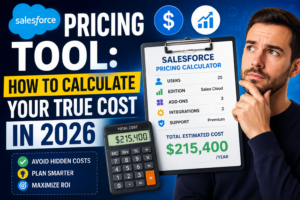
CRMaaS pricing ranges from free (HubSpot CRM free tier, Zoho CRM free for 3 users) to $330+/user/month (Salesforce Unlimited). Most mid-market CRM subscriptions cost $25-80/user/month. In addition to licensing, budget for implementation (typically 1-3x first-year licensing for complex deployments), integration development, and ongoing administration. Annual billing typically saves 15-25% compared to monthly billing.
Conclusion
CRM as a Service has democratised access to enterprise-grade relationship management technology, enabling businesses of all sizes to build and maintain the customer relationships that drive sustainable growth. By choosing the platform that best matches your requirements, team capabilities, and long-term growth plans, and investing appropriately in implementation and adoption, you build a CRMaaS foundation that delivers measurable competitive advantages.
Related Articles
Ready to grow your business with the right technology? Explore VBWebSol’s Custom CRM Software Solutions or contact our expert team for a free consultation. With over 12 years of IT expertise in Ahmedabad, we help businesses across India and globally implement solutions that deliver real, measurable results.