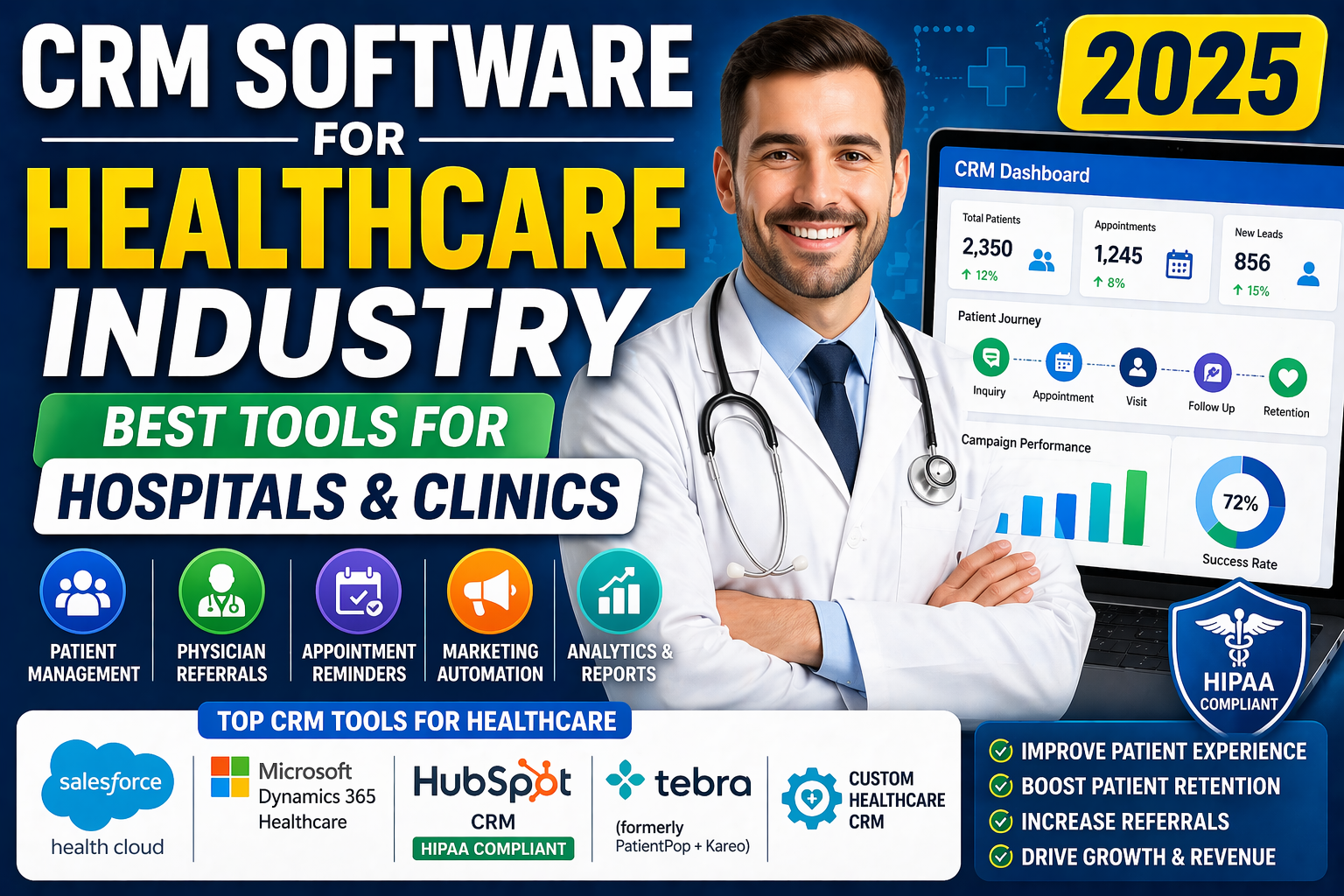
CRM software for the healthcare industry serves a unique and critical purpose: helping healthcare organizations build better relationships with patients, referring physicians, and care partners—while maintaining strict compliance with HIPAA and other healthcare privacy regulations.
Why Healthcare Organizations Need CRM
Healthcare CRM goes beyond typical business relationship management:
- Patient acquisition: Attracting new patients through digital marketing, physician referrals, and community outreach—tracking every lead from first contact through appointment
- Patient retention: Keeping existing patients engaged through preventive care reminders, follow-up scheduling, and personalized health communications
- Physician referral management: Tracking referral relationships with primary care physicians, specialists, and care facilities to build the referral networks that drive volume
- Patient satisfaction: Monitoring satisfaction scores, managing feedback, and identifying service improvement opportunities
- Care coordination: Coordinating care transitions between providers, ensuring continuity and reducing readmissions
HIPAA Compliance in Healthcare CRM
Any CRM for the healthcare industry handling Protected Health Information (PHI) must comply with HIPAA. Key requirements:
- Business Associate Agreement (BAA) with the CRM vendor
- Encryption of PHI at rest and in transit
- Audit logs of all PHI access
- Role-based access controls limiting PHI visibility
- Secure messaging for patient communications
Not all CRM platforms offer HIPAA-compliant configurations. Verify BAA availability before implementing any CRM with patient data.
Key Features in Healthcare CRM Software
Patient Journey Tracking
Track the complete patient acquisition journey—from first digital touchpoint through inquiry, appointment scheduling, first visit, and ongoing care relationship.
Physician Referral Network Management
Maintain a detailed database of referring physicians with contact details, specialty, referral volume, and relationship history. Automate appreciation outreach and track ROI of physician liaison programs.
Appointment and Care Reminder Automation
Automated appointment reminders, preventive care follow-ups, and chronic condition management outreach—reducing no-shows and improving adherence to care plans.
Patient Segmentation
Segment patients by condition, age, service line, payer, or care gap to enable targeted, relevant communication campaigns.
Campaign Attribution
Track which marketing campaigns—digital advertising, community events, physician outreach—generate the most new patients and highest-value service line volume.
Best CRM Software for Healthcare in 2025
Salesforce Health Cloud
Enterprise-grade healthcare CRM from Salesforce. Provides patient management, care coordination, referral tracking, and marketing automation with HIPAA-compliant configuration. Used by major health systems and insurance companies.
Microsoft Dynamics 365 Healthcare
Healthcare accelerator on Dynamics 365 with patient journey orchestration, care team coordination, and referral management. Strong for Microsoft-ecosystem health organizations.
HubSpot CRM (HIPAA Compliance Available)
HubSpot offers HIPAA-compliant configuration (on Enterprise plans) for healthcare organizations needing marketing automation and patient acquisition CRM capabilities. Particularly strong for healthcare marketing teams.
Tebra (formerly PatientPop + Kareo)
Purpose-built for medical practices and ambulatory care. Combines practice management, CRM, patient engagement, and digital marketing in a healthcare-specific platform.
Custom Healthcare CRM
Large health systems with proprietary EHR integrations, unique care coordination workflows, or specific compliance requirements often benefit most from custom healthcare CRM development built to their specifications.
FAQ
What is CRM in healthcare?
CRM in healthcare is customer relationship management software adapted for healthcare organizations to manage patient relationships, physician referral networks, and care partner relationships. Healthcare CRM focuses on patient acquisition, retention, care coordination, and satisfaction management while maintaining HIPAA compliance.
Is CRM software for healthcare HIPAA compliant?
Leading healthcare CRM platforms offer HIPAA-compliant configurations when a Business Associate Agreement (BAA) is signed with the vendor. Salesforce Health Cloud, HubSpot Enterprise, and Microsoft Dynamics 365 all offer HIPAA compliance options. Always confirm BAA availability before implementing any CRM with patient data.
What is the best CRM for hospitals?
Salesforce Health Cloud is the leading enterprise CRM for hospitals and large health systems. Microsoft Dynamics 365 with Healthcare Accelerator is strong for Microsoft-ecosystem organizations. Tebra leads for independent practices and ambulatory care settings.
How does CRM improve patient retention?
Healthcare CRM improves patient retention through automated preventive care reminders, post-appointment follow-up communications, proactive outreach for patients overdue for care, satisfaction monitoring, and personalized health education content—keeping patients engaged with their care and loyal to your organization.
Conclusion
The right CRM software for the healthcare industry enables organizations to build the patient and physician relationships that drive volume, improve outcomes, and differentiate in an increasingly competitive market—while maintaining the strict compliance standards that healthcare demands.
Explore VBWebSol’s custom CRM solutions or contact us today.