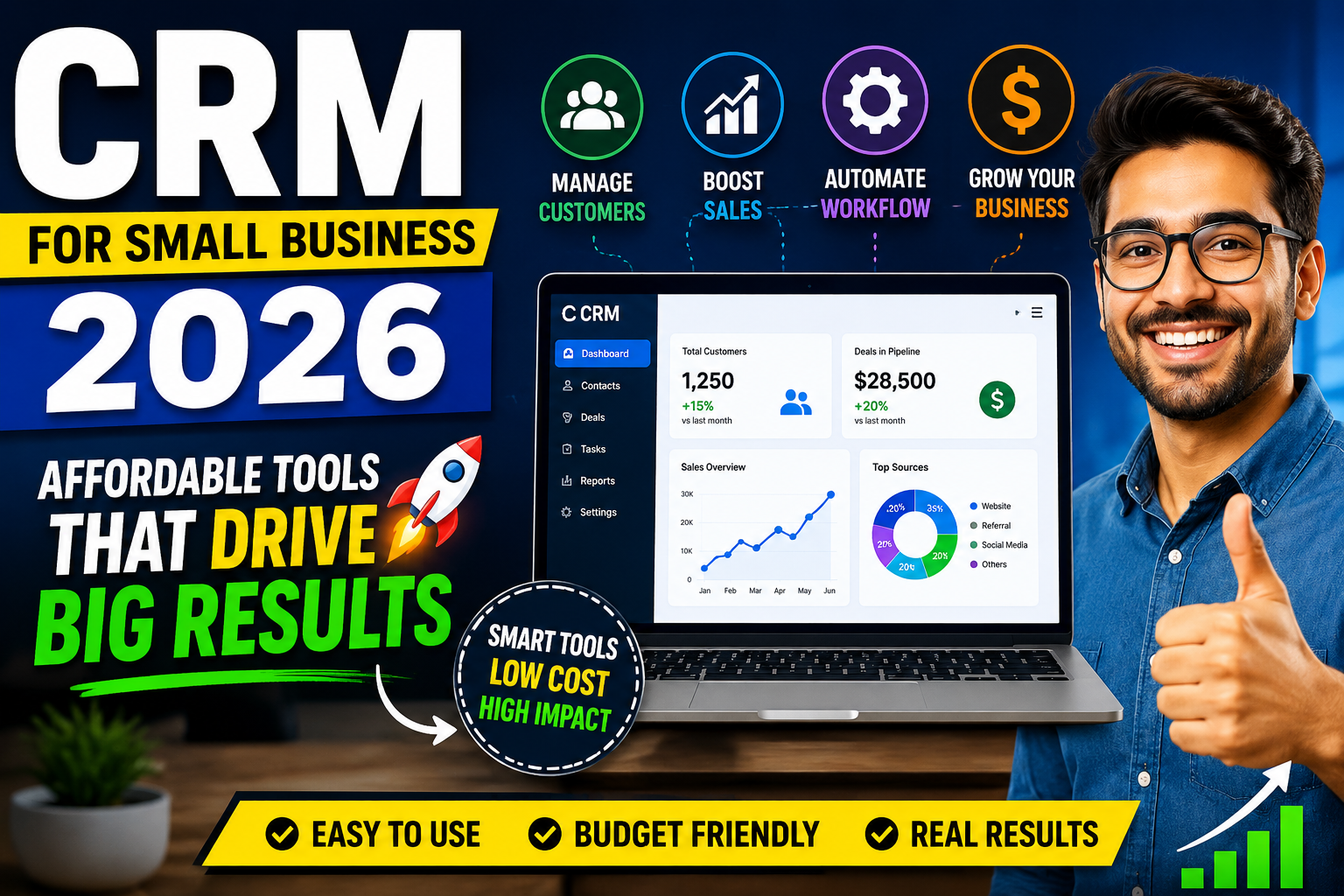
CRM for small business 2026 is one of the smartest investments any entrepreneur or small team can make this year. For years, Customer Relationship Management platforms were associated with large enterprises and corporate IT budgets. That era is over. In 2026, there are dozens of powerful, affordable — and even free — CRM platforms specifically designed for small businesses, freelancers, startups, and growing teams.
The question is no longer “Can a small business afford CRM?” — it is “Can a small business afford NOT to have CRM?”
Why Small Businesses Need CRM in 2026
Small businesses that rely on spreadsheets, sticky notes, and memory to track customer relationships are leaving enormous revenue on the table. Around 82% of successful companies use CRM software for sales reporting, and top marketers believe CRM systems can improve sales by 29%. For a small business, a 29% improvement in sales can be transformational.
With a CRM, your small business can:
- Track every lead from first contact to closed deal
- Automate follow-up emails and reminders
- Get a clear view of your sales pipeline at all times
- Store all customer communication history in one place
- Identify your most valuable customers and nurture them proactively
Top CRM Platforms for Small Business in 2026
1. HubSpot CRM — Best Free Option HubSpot offers a genuinely free CRM with unlimited users and contacts — no credit card required. It includes contact management, deal pipelines, email tracking, meeting scheduling, and basic automation. For small businesses just starting their CRM journey, HubSpot is the perfect entry point.
2. Zoho CRM — Best Value for Money Zoho CRM starts at just a few dollars per user per month and offers an impressive feature set — including AI assistant Zia, workflow automation, multichannel communication, and over 500 integrations. For budget-conscious small businesses that need robust functionality, Zoho is unbeatable value.
3. Pipedrive — Best for Sales-Focused Teams Pipedrive’s visual drag-and-drop pipeline makes managing sales opportunities intuitive and satisfying. Small sales teams love its simplicity and focus — it does one thing exceptionally well: helping you close more deals.
4. Freshsales — Best All-in-One for SMBs Freshsales combines CRM, email, phone, chat, and AI into one affordable platform. Its built-in communication tools mean small businesses do not need to pay for separate phone or chat software.
5. Notion CRM — Best for Solopreneurs For solo founders and freelancers, a custom Notion CRM database offers a flexible, affordable alternative to paid platforms — with templates for contact management, project tracking, and client communication.
Key CRM Features Small Businesses Need in 2026
- Contact & Lead Management — Store and organize all contacts with full history
- Visual Sales Pipeline — See exactly where every deal stands
- Email Integration — Send and track emails directly from the CRM
- Task & Reminder Automation — Never miss a follow-up again
- Mobile App — Access your CRM from anywhere, on any device
- Reporting & Analytics — Understand what is working and what is not
- Integration with Existing Tools — Connect with Gmail, Outlook, WhatsApp, and accounting software
How to Implement CRM Successfully as a Small Business
Many small businesses buy a CRM, set it up halfway, and abandon it within three months. Here is how to avoid that fate:
- Start simple — Use only the features you need right now
- Migrate your data properly — Import all contacts before going live
- Train everyone — Even a team of two needs proper CRM training
- Set up automations early — Let the CRM handle repetitive tasks from day one
- Review weekly — Hold a brief weekly pipeline review to keep data fresh
CRM ROI for Small Business
91% of businesses report reduced customer acquisition costs after implementing CRM. For a small business spending significant marketing budgets on acquiring new customers, even a modest reduction in acquisition cost can fund the entire CRM subscription many times over.
Conclusion
CRM for small business 2026 is no longer complicated, expensive, or reserved for enterprise companies. With free and affordable platforms like HubSpot, Zoho, and Pipedrive — any small business can implement a professional CRM within a week and start seeing results within a month. Stop managing your customers in spreadsheets. Start building relationships at scale. Your small business deserves big-business tools.