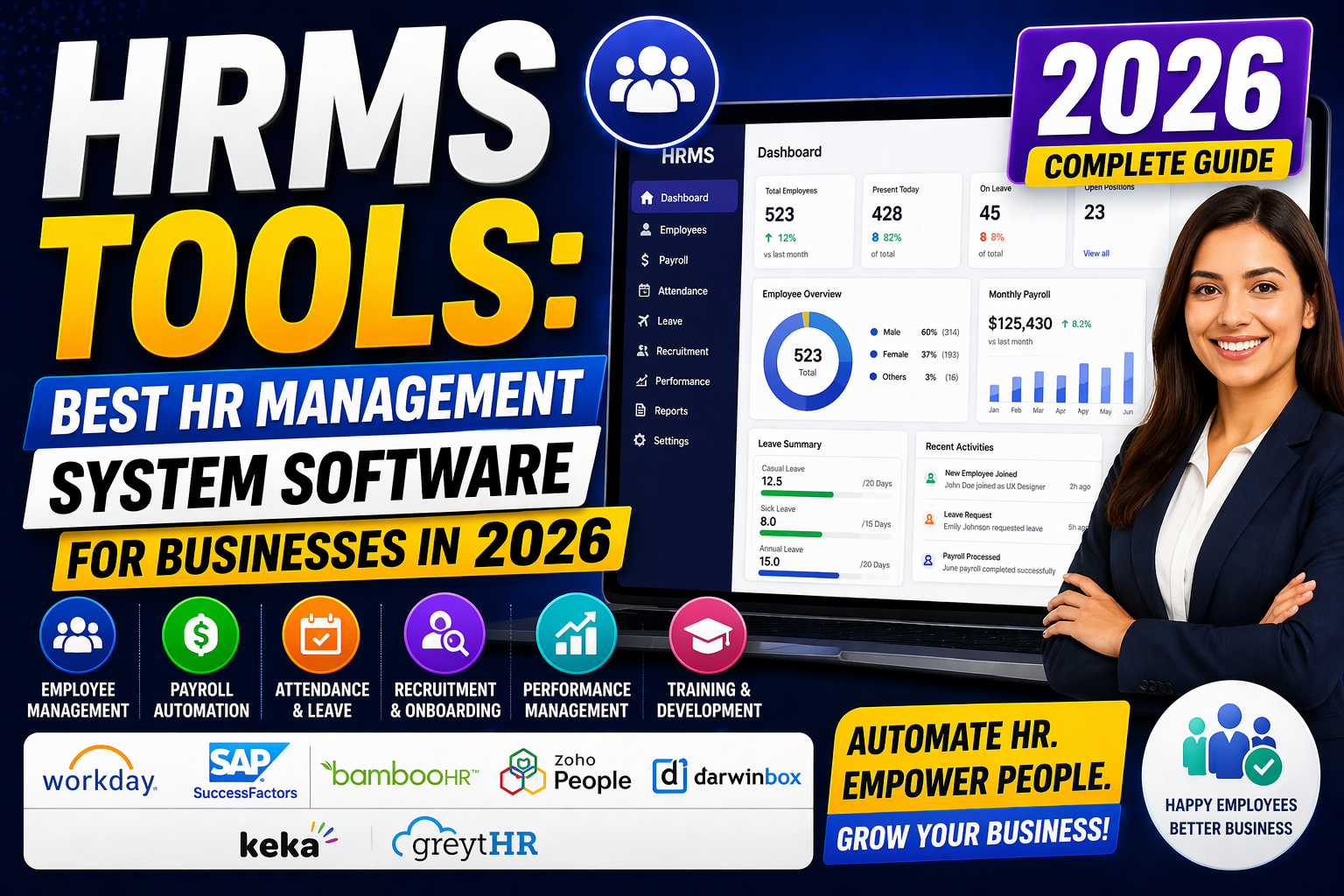
HRMS tools (Human Resource Management System software) are the technology backbone of modern HR departments—automating payroll, leave management, recruitment, performance reviews, compliance, and employee self-service in one integrated platform. Choosing the right HRMS tool can transform HR from an administrative function into a strategic driver of workforce productivity and business growth.
What Is an HRMS?
An HRMS (Human Resource Management System) is comprehensive software that manages the entire employee lifecycle—from recruitment and onboarding through performance management, payroll processing, benefits administration, and offboarding. Modern HRMS platforms combine traditional HRIS (HR Information System) capabilities with talent management, workforce analytics, and self-service portals.
Core Functions of HRMS Tools
Employee Database Management
A centralized repository of all employee data—personal information, employment history, qualifications, compensation, and documents—accessible to HR, managers, and employees through role-based permissions.
Payroll Processing
Automated payroll calculation including salary, overtime, bonuses, deductions, and tax compliance. Integration with banking systems for direct deposit and automated statutory filings.
Leave and Attendance Management
Employee leave requests, manager approvals, balance tracking, and attendance monitoring—often with biometric device integration and shift scheduling capabilities.
Recruitment and Applicant Tracking
Job posting, application collection, candidate screening, interview scheduling, offer management, and onboarding workflow—managing the full recruitment lifecycle.
Performance Management
Goal setting, 360-degree feedback, performance review cycles, rating calibration, and development plan tracking aligned with business objectives.
Learning and Development
Training course assignment, completion tracking, certification management, and learning management system (LMS) integration for employee skill development.
Employee Self-Service
Portals and mobile apps letting employees view payslips, apply for leave, update personal information, access company policies, and complete HR tasks without contacting HR directly.
Best HRMS Tools in 2026
Workday
Enterprise-grade HRMS + financial management platform. Industry leader for large organizations needing comprehensive HR, payroll, and analytics. Complex implementation but unmatched functionality and reporting.
SAP SuccessFactors
Enterprise HR suite from SAP covering core HR, talent management, workforce analytics, and payroll. Best for SAP-ecosystem organizations and large enterprises with complex global HR requirements.
BambooHR
Popular HRMS for SMBs and mid-market companies. Clean interface, strong applicant tracking, performance management, and employee experience features. Excellent user adoption. From $6–$8/employee/month.
Zoho People
Comprehensive HRMS from Zoho with payroll, leave, attendance, performance, and learning management. Strong value for SMBs already in the Zoho ecosystem. From $1.25/user/month.
Darwinbox
Leading HRMS in Asia Pacific, strong in India and Southeast Asia. Full HRMS suite including payroll, talent management, and workforce analytics with deep statutory compliance for Asian markets.
Keka
Popular in India for payroll accuracy, leave management, and employee experience. Strong compliance with Indian labor laws and statutory requirements. From ₹6,999/month for 50 employees.
greytHR
India-focused HRMS with comprehensive payroll, statutory compliance, leave management, and employee self-service. From ₹3,495/month for up to 25 employees.
How to Choose the Right HRMS Tool
- Company size: SMBs need simpler, more affordable tools. Enterprise needs scalability and global compliance.
- Geography: Payroll compliance requirements vary dramatically by country. Choose a tool with strong local compliance for your operating regions.
- Integration needs: Does it integrate with your accounting software, time tracking, and ERP?
- User experience: Employee adoption depends on how easy the self-service portal is to use.
- Total cost: Compare per-employee pricing, implementation costs, and module-based add-ons.
FAQ
What are HRMS tools?
HRMS tools are Human Resource Management System software platforms that automate HR functions including employee data management, payroll processing, leave and attendance tracking, recruitment, performance management, and employee self-service—managing the complete employee lifecycle in one integrated system.
What is the best HRMS for small businesses?
BambooHR and Zoho People are the top HRMS tools for small businesses—offering comprehensive HR functionality at accessible price points with excellent user experiences. Keka and greytHR lead for Indian small businesses needing strong payroll compliance.
What is the difference between HRMS and HRIS?
HRIS (Human Resource Information System) focuses on storing and managing employee data—personal information, employment records, and basic HR administration. HRMS is broader, adding payroll processing, talent management, performance reviews, and workforce analytics on top of the core HRIS data management capabilities.
How much do HRMS tools cost?
HRMS pricing ranges from $1–$10/employee/month for SMB platforms to $15–$30+/employee/month for enterprise systems. Implementation costs add significantly for enterprise deployments. Indian platforms like greytHR and Keka offer competitive pricing starting around ₹3,500–₹7,000/month for small teams.
Conclusion
The right HRMS tool transforms HR operations—reducing administrative burden, ensuring compliance, improving employee experience, and giving leadership the workforce data needed for strategic decisions. Whether you’re a growing SMB or a large enterprise, there’s an HRMS platform designed for your scale and requirements.
Need custom HR software or HRMS integration for your business? Explore VBWebSol’s development services or contact us.