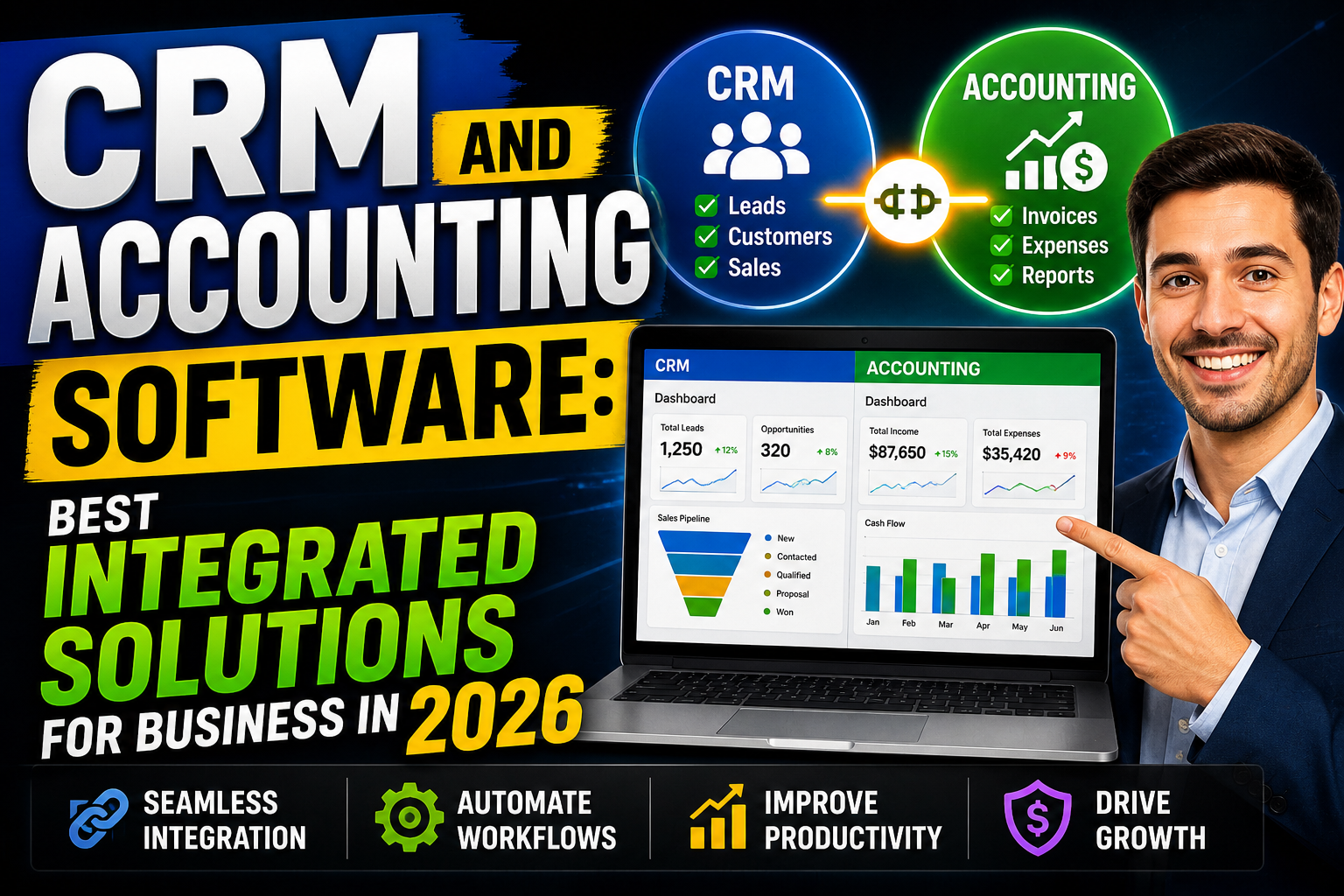
Managing customer relationships and business finances in separate systems creates data silos, manual reconciliation work, and missed business insights. CRM and accounting software integration—or combined platforms offering both—gives businesses a unified view of customer value, payment history, outstanding invoices, and revenue attribution.
Why CRM and Accounting Software Integration Matters
- Complete customer financial view: See every customer’s purchase history, outstanding invoices, and payment status alongside their CRM relationship data
- Eliminate double data entry: Customer information entered in CRM flows to accounting without manual re-entry—and vice versa
- Revenue attribution: Understand which marketing activities and sales reps drive the most profitable revenue—not just the most deals
- Collections management: Sales teams can see overdue accounts and coordinate with finance on relationship-sensitive collections
- Faster invoicing: Create invoices directly from closed CRM deals without re-entering deal details in accounting
Best CRM and Accounting Software Combinations
HubSpot CRM + QuickBooks
One of the most popular combinations for small and mid-size businesses. HubSpot’s native QuickBooks integration syncs contacts, invoices, and payment status. Create QuickBooks invoices from HubSpot deals with one click. Both products are category leaders in their respective areas.
Zoho CRM + Zoho Books
The most seamlessly integrated combination—both products are from Zoho and share a unified platform. Customer records, invoices, quotes, and payment data flow automatically between Zoho CRM and Zoho Books. Excellent value at combined pricing around $20–$35/user/month.
Salesforce + Xero/QuickBooks
Enterprise CRM connected to popular accounting platforms. Salesforce’s AppExchange connectors for QuickBooks (DBSync, Breadwinner) and Xero (Breadwinner) provide bidirectional data sync. More setup required but powerful for enterprise revenue operations teams.
Freshsales + Freshbooks
Both from the Freshworks ecosystem with native integration. Strong for service businesses combining CRM with project-based billing.
All-in-One Platforms
Some platforms include both CRM and accounting natively:
- Odoo: Open-source ERP with native CRM and accounting modules. Best for businesses wanting a single platform for all operations.
- Sage Business Cloud: Combined CRM and accounting for SMBs in the UK and Europe.
- NetSuite: Enterprise ERP with CRM and full financial management integrated. For mid-market and enterprise organizations.
Key Data Points to Sync Between CRM and Accounting
- Customer/contact records (bidirectional, single source of truth)
- Quotes and proposals (CRM) → Invoices (accounting)
- Invoice status and payment history visible in CRM
- Revenue by customer, product, and sales rep in both systems
- Credit limits and payment terms in CRM for sales reference
FAQ
What is CRM accounting software?
CRM accounting software refers to either integrated platforms combining CRM and accounting in one system (like Zoho’s combined suite or Odoo) or CRM and accounting tools connected through integration (like HubSpot + QuickBooks). The goal is a unified view of customer relationships and financial transactions without data silos.
What is the best CRM with accounting integration?
Zoho CRM + Zoho Books offers the most seamless native integration for SMBs. HubSpot + QuickBooks is the most popular combination. Salesforce with Xero or QuickBooks connectors leads for enterprise. Odoo provides the most comprehensive all-in-one alternative.
Does HubSpot integrate with QuickBooks?
Yes—HubSpot has a native QuickBooks integration available in the HubSpot App Marketplace. It syncs contacts, deals, and invoices between platforms—allowing invoice creation from HubSpot deals and payment status visibility within HubSpot contact records.
Can CRM replace accounting software?
No—CRM manages customer relationships, pipeline, and communication. Accounting software handles financial transactions, tax compliance, payroll, and statutory reporting. These are distinct functions requiring specialized tools. Integration between CRM and accounting is the recommended approach, not replacement.
Conclusion
Connecting your CRM and accounting software eliminates data silos, reduces double data entry, and gives sales, finance, and leadership teams the unified business intelligence they need to make better decisions.
Want a custom CRM with accounting system integration? Explore VBWebSol’s CRM development or contact us.