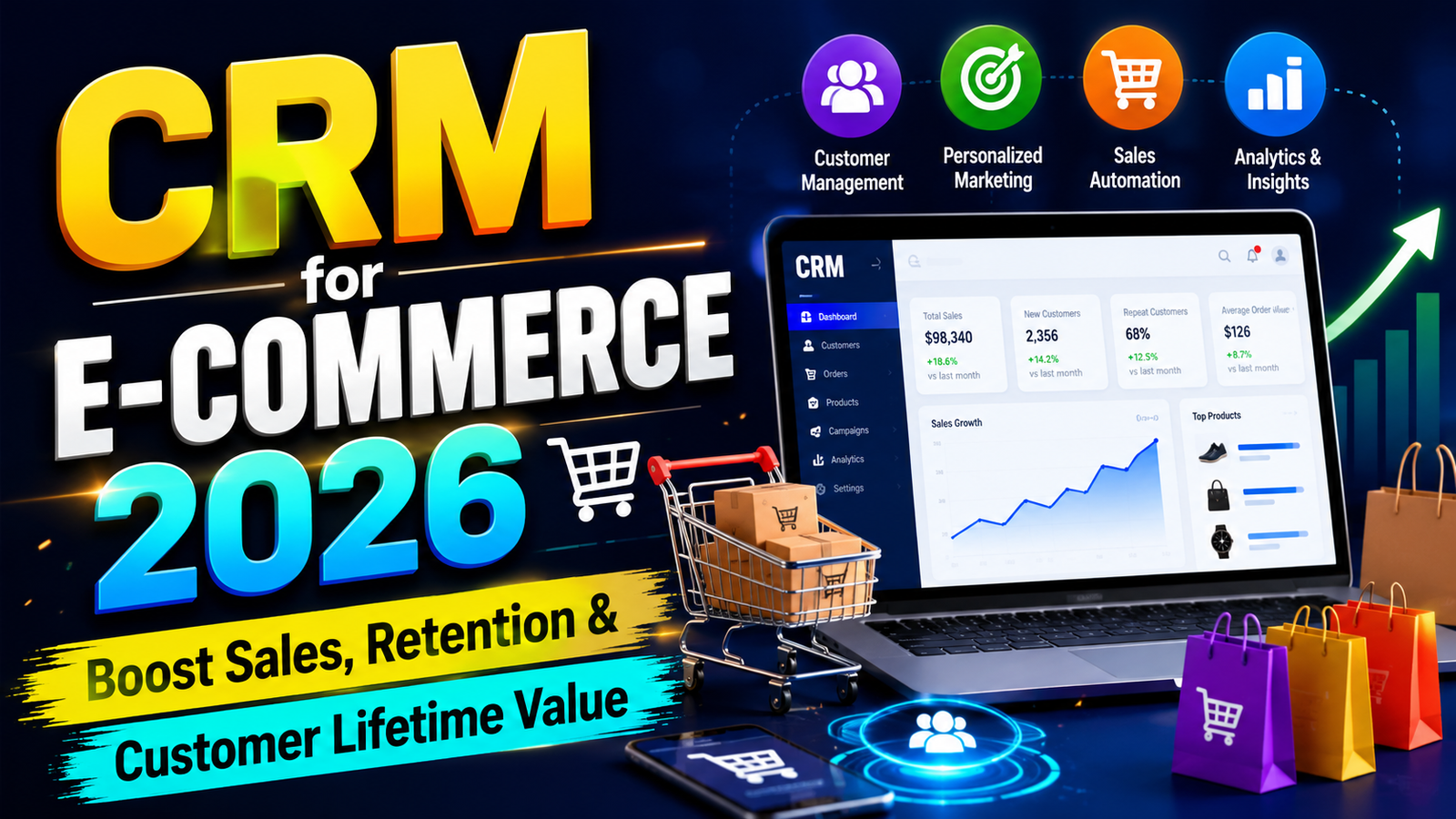
CRM for e-commerce 2026 has become the single most important technology investment for online retailers who want to move beyond one-time transactions and build genuinely loyal, high-value customer relationships. In a world where customer acquisition costs are rising dramatically and competition from global marketplaces is intensifying — retaining existing customers and maximizing their lifetime value is not just a nice-to-have strategy. It is a business survival imperative.
The average e-commerce business loses 60–80% of its customers after the first purchase. A well-implemented e-commerce CRM can dramatically reverse this trend — turning one-time buyers into loyal repeat customers who spend more, refer friends, and become genuine brand advocates.
Why E-Commerce Businesses Need a CRM
Traditional e-commerce analytics tools tell you what happened — which products sold, what your conversion rate was, how much revenue you generated. E-commerce CRM tells you who your customers are, what they care about, when they are most likely to buy again,
and how to personalize every communication to maximize the probability of repeat purchase.
Key E-Commerce CRM Features in 2026
1. Unified Customer Profiles A comprehensive CRM consolidates every piece of customer data — purchase history, browsing behavior, email engagement, support interactions, social media activity,
and demographic information — into a single, unified customer profile. This 360-degree view enables genuinely personalized communication at every touchpoint.
2. Abandoned Cart Recovery Automation Approximately 70% of online shopping carts are abandoned before purchase. E-commerce CRM platforms trigger automated abandoned cart recovery sequences — personalized email, SMS, and WhatsApp messages — at precisely timed intervals, often recovering 10–15% of abandoned revenue without any manual effort.
3. Post-Purchase Nurture Sequences The period immediately after a first purchase is the highest-opportunity moment to build customer loyalty. CRM-powered post-purchase sequences deliver order confirmation, shipping updates, product usage tips, review requests, and complementary product recommendations — creating an exceptional first experience that encourages repeat purchase.
4. Customer Segmentation for Personalized Marketing Segment your customer database by RFM (Recency, Frequency, Monetary value), product category preference, geographic location, acquisition channel, and purchase behavior. These segments power hyper-personalized marketing campaigns that speak directly to each customer’s specific interests and purchase patterns.
5. Win-Back Campaigns for Lapsed Customers Identify customers who haven’t purchased in 60, 90, or 120 days and automatically trigger win-back campaigns — compelling offers,
personalized messages referencing their previous purchases, and clear calls-to-action designed to re-engage dormant relationships before they are permanently lost.
6. VIP Customer Recognition Identify and segment your highest-value customers based on total spend, purchase frequency, and lifetime value. Create dedicated VIP programs — exclusive early access, personalized discounts, dedicated support — that reward loyalty and incentivize continued high-value purchasing.
7. AI-Powered Product Recommendations AI-driven product recommendation engines analyze each customer’s purchase history, browsing behavior,
and similar customer patterns to suggest highly relevant products at the right moment — in emails, SMS messages, and personalized website experiences.
Top E-Commerce CRM Platforms in 2026
| Platform | Best For |
|---|---|
| Klaviyo | Shopify/WooCommerce email & SMS |
| HubSpot + Shopify | Full CRM + ecommerce integration |
| Salesforce Commerce Cloud | Enterprise e-commerce |
| Drip | SMB e-commerce automation |
| Omnisend | Multichannel e-commerce marketing |
Measuring E-Commerce CRM Success
Track these KPIs to measure your e-commerce CRM ROI: customer retention rate, repeat purchase rate, average order value, customer lifetime value (CLV), email revenue per subscriber,
abandoned cart recovery rate, and net promoter score (NPS).
Conclusion
CRM for e-commerce 2026 is your most powerful tool for transforming a transactional online store into a relationship-driven brand that generates compounding revenue from a loyal customer base. The e-commerce businesses that invest in CRM today will build the customer loyalty moats that no competitor can easily replicate. Stop acquiring customers. Start keeping them.