Software quality assurance has undergone a fundamental transformation over the past decade. Test Automation Software has moved from a bottleneck at the end of the development cycle to an integral part of continuous delivery pipelines. This guide provides a comprehensive technical examination of test automation software — covering architecture, toolchain selection, implementation strategies, and how to build a testing practice that scales with your development velocity.
The Business Case for Test Automation
Manual testing cannot keep pace with agile development cycles. A sprint that produces 50 new features in two weeks cannot be manually tested in a day. Test automation solves this velocity problem by enabling tests to run in parallel, automatically, on every code commit. The business benefits are substantial: faster release cycles (from months to days or hours), reduced regression risk, lower long-term QA cost (high upfront investment in test infrastructure pays back exponentially), and higher software quality as measured by post-release defect rates.
Testing Pyramid: The Architectural Foundation
The testing pyramid (popularised by Mike Cohn) defines the ideal distribution of test types in a well-architected test suite. Unit tests form the base (70% of all tests) — they are fast (milliseconds), isolated, and cheap to maintain. Integration tests form the middle layer (20%) — they test interactions between components. End-to-end tests form the apex (10%) — they simulate real user journeys through the full application stack. Violating the pyramid (too many slow E2E tests, too few unit tests) leads to brittle, slow test suites that hinder rather than enable development.
Top Automation Testing Tools and Frameworks
Web Application Testing
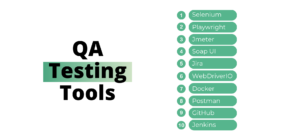
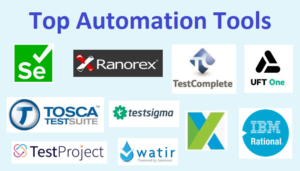
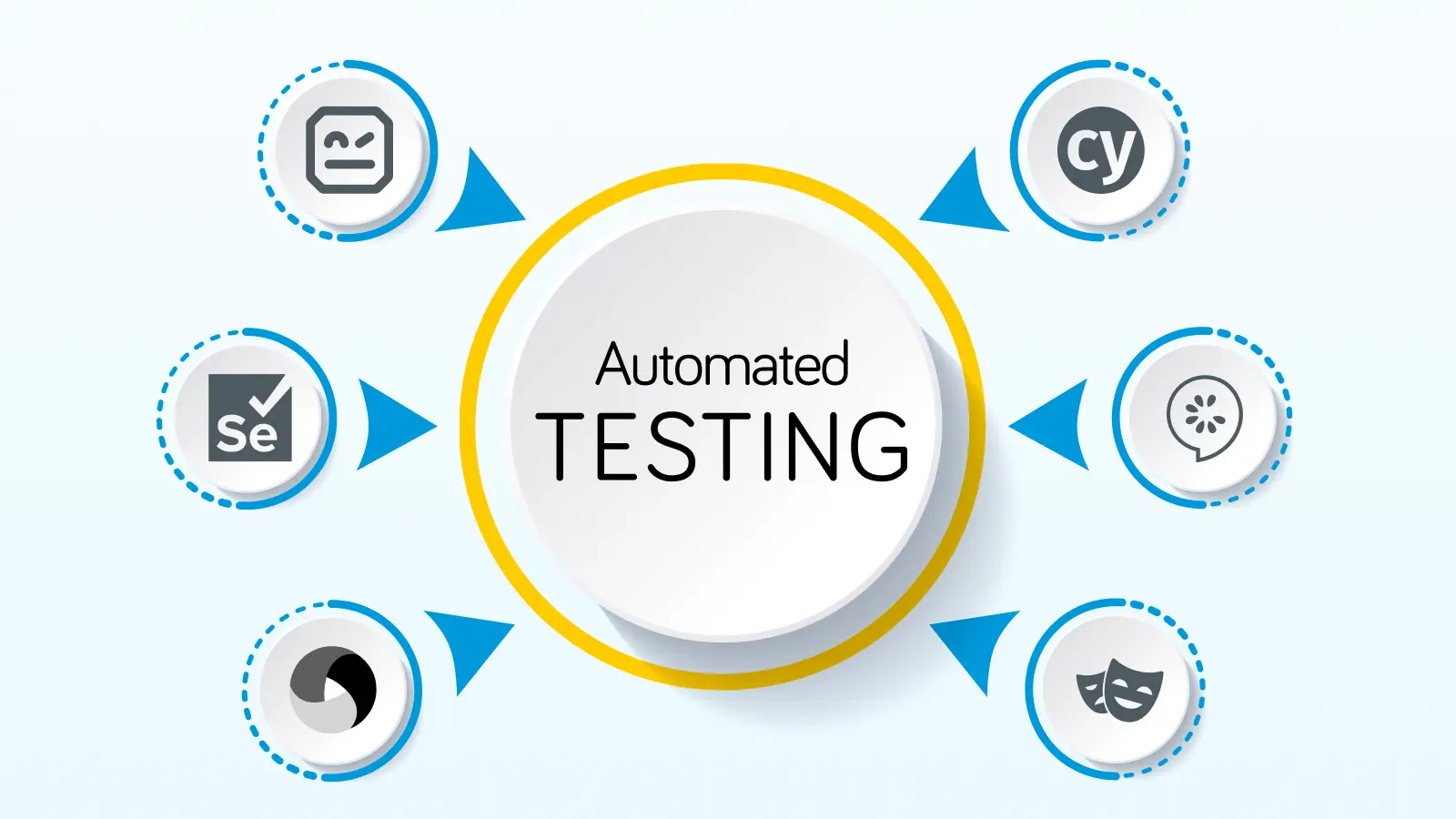
Selenium remains the most widely adopted web automation framework, with support for all major browsers and programming languages. However, newer frameworks have overtaken it in developer preference. Playwright (Microsoft, 2020) provides superior reliability with its auto-wait mechanism that eliminates the most common source of flaky tests. Cypress offers an excellent developer experience with real-time reloading and powerful debugging tools but is limited to Chromium-based browsers in some scenarios. For most new projects, Playwright is the recommended choice for its combination of reliability, speed, and multi-browser support.
API Testing
REST Assured (Java) and pytest with requests (Python) are the dominant API testing frameworks. Postman/Newman provides a no-code/low-code API testing option with good CI/CD integration. Contract testing with Pact.js or Pact-JVM is increasingly important in microservices architectures, ensuring service contracts remain valid across independent deployments. GraphQL APIs require specialised tooling (Jest + Apollo testing utilities, Karate DSL) to test query/mutation correctness.
Mobile Testing
Appium is the de facto standard for cross-platform mobile automation, supporting both iOS (WebDriverAgent) and Android (UIAutomator2) from a single codebase. XCUITest (iOS) and Espresso (Android) provide native testing frameworks with better performance but require platform-specific code. Cloud-based device farms (AWS Device Farm, BrowserStack, Sauce Labs) enable parallel testing across hundreds of real device configurations.
Performance Testing
JMeter and Gatling are the leading open-source performance testing tools. k6 (Go-based, JavaScript scripting) has gained significant adoption for its developer-friendly approach and cloud integration. Performance tests should validate both baseline performance (latency, throughput under normal load) and breaking points (what load causes the system to fail, and how does it fail?).
CI/CD Integration Architecture
Test automation’s value is fully realised when integrated into CI/CD pipelines. A well-architected pipeline runs unit tests on every commit (< 5 minutes), integration tests on every PR (< 15 minutes), E2E smoke tests on every deployment to staging (< 30 minutes), and full regression suite overnight. Failed tests block deployment to production, ensuring that no regression goes undetected. Jenkins, GitHub Actions, GitLab CI, and CircleCI are the most common CI/CD platforms for orchestrating test execution.
Test Data Management
Test data is one of the most challenging aspects of maintaining a reliable test automation suite. Strategies include: database fixtures (scripted data setup before each test run), factories and fakers (generated realistic test data), snapshot testing (capturing and comparing rendered output), and dedicated test environments with pre-seeded data. Proper test data management prevents test interdependencies that cause flaky, order-dependent tests.
Reporting and Quality Metrics
Test automation requires robust reporting to be actionable. Essential metrics include: test pass rate by component and environment, code coverage percentage (aiming for 80%+ on critical paths), test execution time trends (detect suite slowdowns early), flakiness index (percentage of tests that fail intermittently without code changes), and defect detection efficiency (what percentage of production bugs were caught by automated tests).
VBWebSol’s QA and Test Automation Services
VBWebSol provides end-to-end test automation consulting and implementation services for software development projects. Our QA engineers design and implement test suites using Playwright, Selenium, Appium, and pytest, integrated into your CI/CD pipeline. We also build custom testing platforms and quality dashboards for enterprises that need bespoke quality assurance infrastructure.
Frequently Asked Questions
What is test automation software?
Test Automation Software refers to software tools and frameworks that enable automated execution of tests against software applications. They replace manual testing for regression verification, enabling faster release cycles and higher software quality.
What is the best test automation framework?
The best framework depends on your technology stack. Playwright or Cypress for web front-end, pytest for Python backends, JUnit/TestNG for Java, Appium for mobile, and JMeter/k6 for performance testing are leading choices in their respective domains.
How much does test automation cost to implement?
Open-source frameworks like Selenium, Playwright, and pytest are free. The primary cost is engineering time for test development and maintenance. Commercial platforms like Sauce Labs, BrowserStack, or Mabl charge $400-$2,000+ per month. Outsourced test automation implementation from a company like VBWebSol typically ranges from $5,000-$30,000 depending on scope.
What is the ROI of test automation?
Test automation typically reduces regression testing time by 60-80%, cuts post-release defect rates by 30-50%, and enables development teams to ship features 2-5x faster. Most organisations see positive ROI within 3-6 months of implementing a comprehensive automation suite.
What is a test automation suite?
A test automation suite is a collection of automated tests organised by type (unit, integration, E2E) and component that together provide comprehensive coverage of an application’s functionality. A well-designed suite follows the testing pyramid, with many fast unit tests and fewer slower E2E tests.
Ready to Build Your Custom Custom Software Development & QA?
VBWebSol has helped 500+ businesses across India and the USA build powerful, scalable software solutions. Our expert team delivers on time, within budget, and tailored to your exact needs.