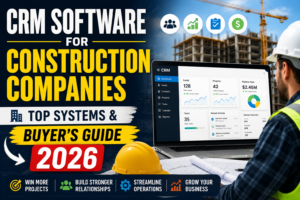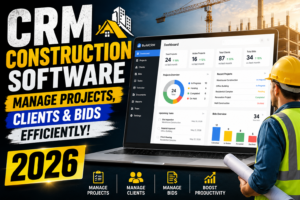
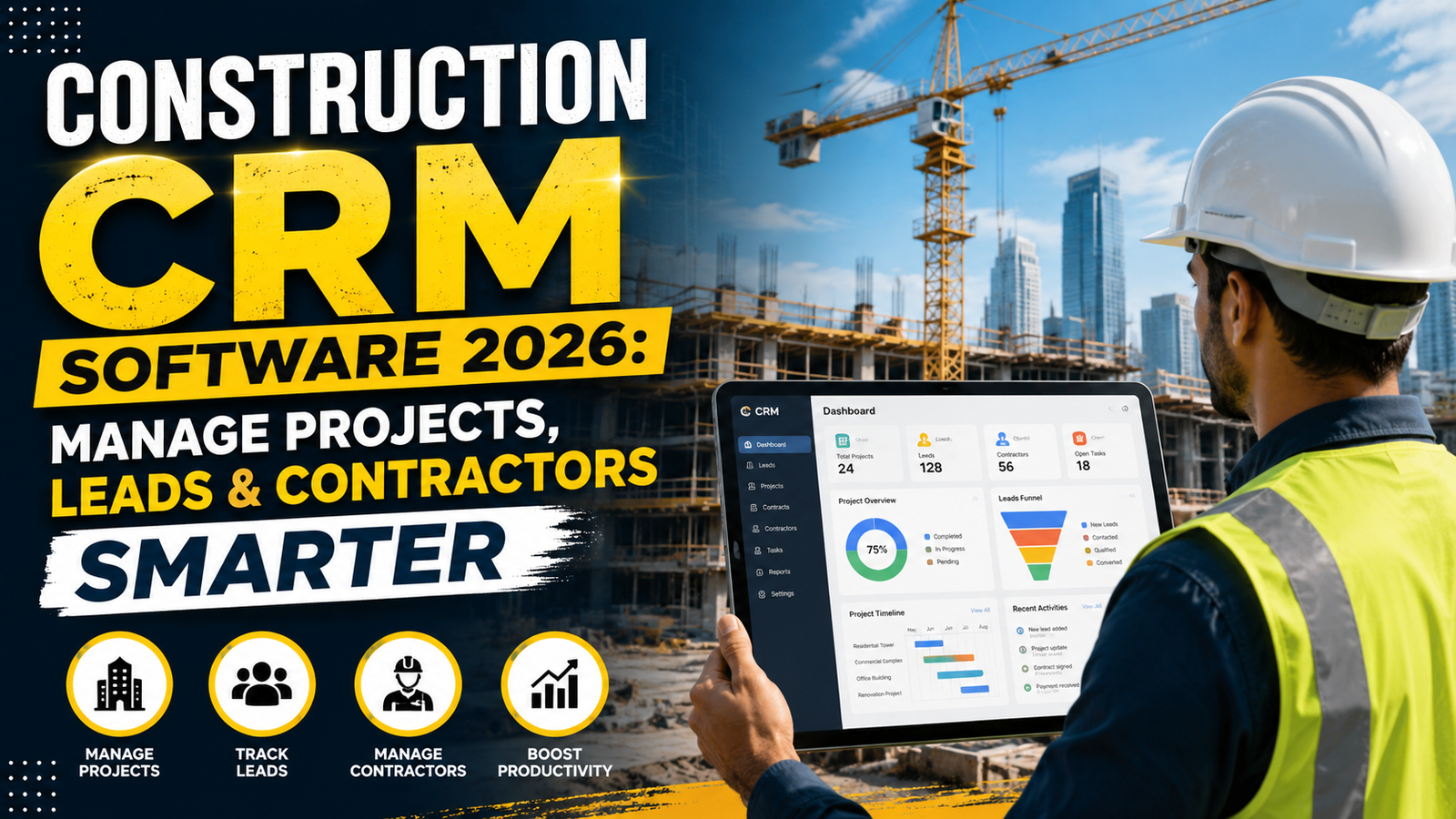
Construction CRM software 2026 is rapidly becoming one of the most important technology investments for construction companies, contractors, and real estate developers. Managing multiple projects, dozens of contractors, complex client relationships, and unpredictable timelines requires a centralized, intelligent system — and that is exactly what modern Construction CRM platforms deliver.
3 A decade ago, a CRM was essentially a digital address book with sales tracking features — today it is a sophisticated business intelligence engine that can predict which leads are most likely to convert, automatically send personalized messages, generate customer service responses, and analyze millions of data points in real time.
For construction businesses,
this means transforming scattered spreadsheets and email threads into a unified, real-time command center.
Why Construction Companies Need CRM Software
The construction industry faces unique operational challenges:
- Long, complex sales cycles with multiple decision-makers
- Hundreds of supplier and subcontractor relationships
- Project delays, budget overruns, and scope changes
- Regulatory compliance and safety documentation requirements
9 Looking ahead into 2026, CRM systems are becoming mainstream tools that can help companies manage their relationships with customers, contribute towards top-line growth,
and inform managerial decisions — regardless of the size of your company, it is vital to keep abreast of the emerging CRM trends.
Key Features of Construction CRM Software
1. Lead & Bid Management Track all incoming project inquiries, bids, and proposals in a visual pipeline. Know the status of every opportunity — from initial enquiry to contract signing — in real time.
2. Project Timeline Management Construction CRM platforms integrate with project management tools to give you a complete view of timelines, milestones, resource allocation, and potential delays.
3. Contractor & Subcontractor Management Maintain a detailed database of all contractors, subcontractors, and suppliers — including their performance history, certifications, insurance documents, and availability.
4. Client Communication Hub All client communications — emails, calls, meetings, site visit reports — are logged automatically in the CRM,
ensuring nothing falls through the cracks and every team member has full context.
5. CRM Automation for Follow-Ups
3 CRM automation trends in 2026 are fundamentally changing how business workflows operate — sales teams are no longer spending hours on manual data entry, following up on cold leads,
or scheduling meetings individually, as intelligent CRM automation handles all of this in the background.
6. Document Management Store contracts, blueprints, permits, safety certifications,
and inspection reports directly within the CRM — linked to specific projects and contacts for instant retrieval.
Top Construction CRM Platforms in 2026
- Procore CRM — Industry-specific, built for construction
- Buildertrend — Best for home builders and remodelers
- CoConstruct — Excellent for custom builders
- HubSpot + Construction Add-ons — Flexible and scalable
Conclusion
Construction CRM software 2026 is your competitive advantage in an increasingly complex industry. From winning more bids and managing contractor relationships to delivering projects on time and delighting clients — the right CRM transforms how your construction business operates. Stop managing your business in spreadsheets and start building smarter with CRM.