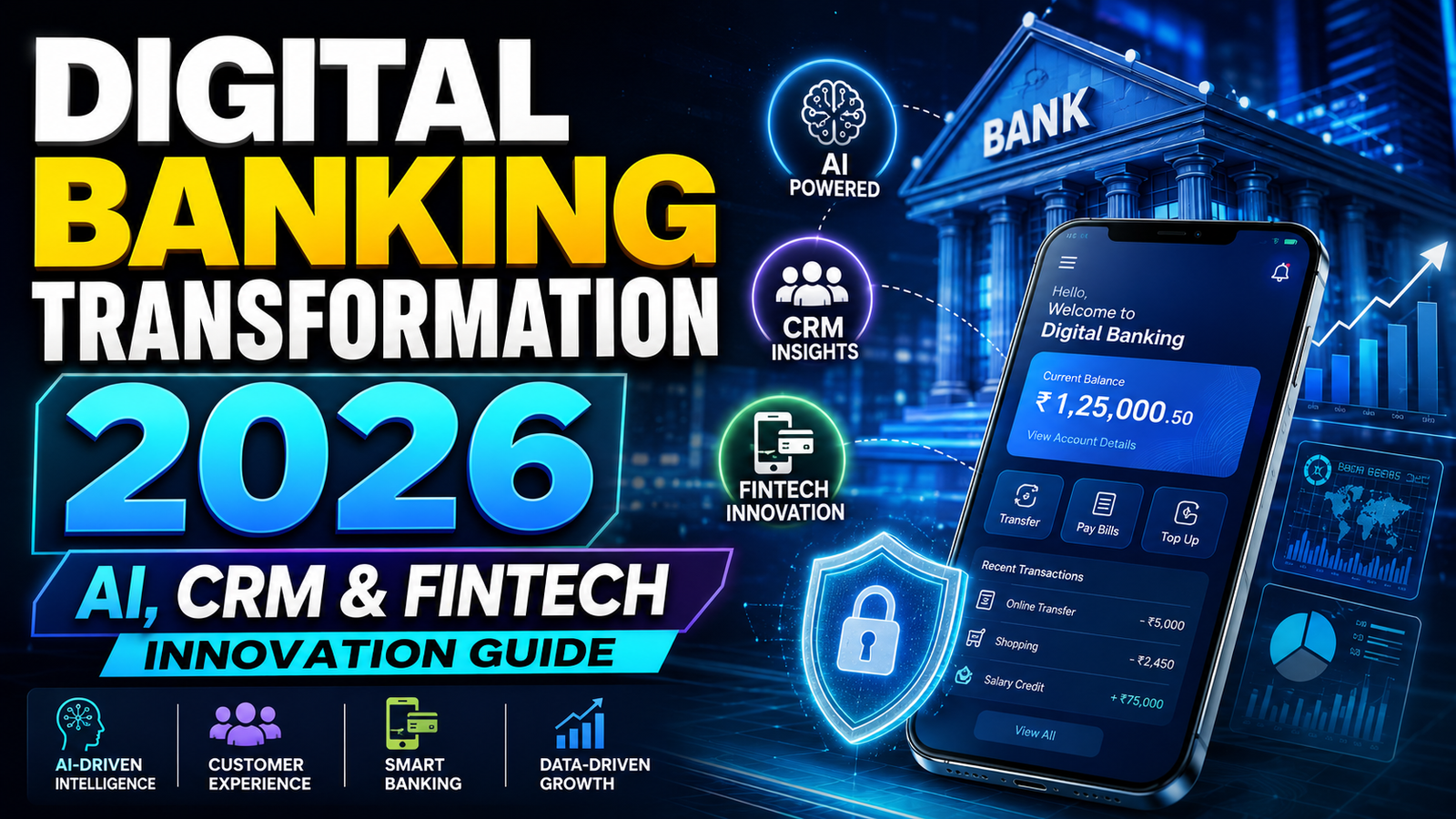
Digital banking transformation 2026 is reshaping the financial services industry at an unprecedented pace. Traditional banks that have operated on legacy systems and branch-centric models for decades are now competing against nimble fintech startups, digital-native neobanks, and technology giants offering increasingly sophisticated financial services. The pressure to transform is existential — and the technologies enabling that transformation have never been more powerful.
In 2026, the most successful banks are those that have embraced AI-powered personalization, mobile-first design, open banking APIs, and intelligent CRM systems — delivering financial experiences that feel as intuitive and personalized as the best consumer apps their customers use daily.
The Digital Banking Landscape in 2026
The global digital banking market continues its explosive growth trajectory in 2026. Neobanks like Revolut, N26, and Nubank have accumulated tens of millions of customers by offering superior digital experiences, lower fees,
and innovative features that traditional banks struggle to match. In response, traditional financial institutions are accelerating their own digital transformation programs — investing heavily in AI, cloud infrastructure,
and customer experience technology.
Key Digital Banking Transformation Technologies
1. AI-Powered Personalization The most impactful digital banking transformation technology is AI-driven personalization. Banks in 2026 use AI to analyze customer transaction data, behavioral patterns,
and life events to deliver proactive, contextually relevant financial advice and product recommendations.
When a customer’s salary increases by 20%, an AI banking CRM can automatically trigger a personalized message suggesting a savings account upgrade or investment consultation. When transaction patterns indicate a customer is saving for a specific goal, the bank can proactively offer relevant financial products. This level of personalization was impossible with legacy banking systems.
2. Open Banking APIs Open banking — which requires banks to share customer data with authorized third-party applications through secure APIs (with customer consent) — is now a regulatory requirement in most markets and a powerful innovation driver. Open banking APIs enable customers to see all their financial accounts in one place, allow fintech apps to offer intelligent financial management tools, and enable banks to embed financial services in non-banking platforms.
3. Banking CRM Transformation Modern banking CRM platforms are transforming how relationship managers serve customers. AI-powered banking CRM provides a complete customer financial profile — all products held, transaction history, life events, communication preferences, and relationship profitability — in a single interface. Predictive analytics identifies customers at risk of churning,
those ready for additional products, and those who would benefit from proactive financial advice.
4. Mobile-First Banking In 2026, the mobile banking app is the primary interface between most banks and their customers. The best banking apps in 2026 offer instant account opening,
biometric authentication, real-time spending notifications and categorization, AI-powered spending insights,
instant domestic and international transfers, investment management, and integrated insurance products — all from a beautifully designed mobile interface.
5. AI Fraud Detection
AI-powered fraud detection systems analyze thousands of transaction attributes in real time — flagging suspicious transactions, blocking fraudulent payments, and preventing account takeovers with a level of accuracy that rule-based systems could never achieve. Advanced behavioral biometrics analyze how a user holds their phone, types, and navigates the app — detecting account takeover attempts even when the fraudster has the correct credentials.
6. Conversational Banking AI-powered banking chatbots and voice assistants handle routine customer inquiries, transaction history queries, card management, and simple financial calculations — 24/7, across all channels. More advanced conversational AI is now capable of providing personalized financial guidance,
walking customers through loan applications, and explaining complex product terms in plain language.
7. RegTech & Compliance Automation Regulatory technology (RegTech) is automating compliance processes that previously required large teams of compliance professionals. AI-powered KYC (Know Your Customer) systems verify identity documents, screen against sanctions databases,
and assess money laundering risk in minutes rather than days. Automated regulatory reporting reduces compliance costs and improves accuracy.
The Neobank Competitive Threat
Traditional banks in 2026 face their most serious competitive challenge from neobanks — digital-native financial institutions with no legacy infrastructure, lower cost bases,
and superior digital experiences. The most effective competitive response is not simply copying neobank features — it is leveraging the trust, capital, regulatory expertise, and existing customer relationships that traditional banks possess,
combined with modern digital technology and genuine customer-centric product innovation.
Conclusion
Digital banking transformation 2026 is not optional for financial institutions that intend to remain relevant. The technology enablers — AI, open banking APIs, intelligent CRM,
and mobile-first design — are proven and available. The question is not whether to transform, but how fast and how boldly. The banks that move decisively in 2026 will define the financial services landscape for the next decade.