If you’ve ever wondered, “Where should I promote my business so people actually notice it?”, you’re really asking about the right marketing mediums. A marketing medium is simply the channel you use to communicate your message to your audience – think social media, email, TV ads, billboards, blogs, and more.
Pick the right medium and your brand feels everywhere. Pick the wrong one and it’s like shouting into an empty room. In 2026, with so many options fighting for attention, knowing which mediums to use (and how) can make or break your marketing.
Let’s break it all down in a simple, conversational way.
Why Marketing Mediums Matter More Than Ever
Your product can be amazing, but if it lives in the wrong place, it stays invisible. Marketing mediums matter because they:
-
Decide who actually sees your message
-
Influence how people feel about your brand
-
Impact how much you spend vs. what you earn
-
Shape how quickly you build trust and authority
Think of mediums like roads. The message is your car. You can have a luxury car, but if you drive it down a dead-end street, you’re not going far.
Types Of Marketing Mediums: Online Vs. Offline
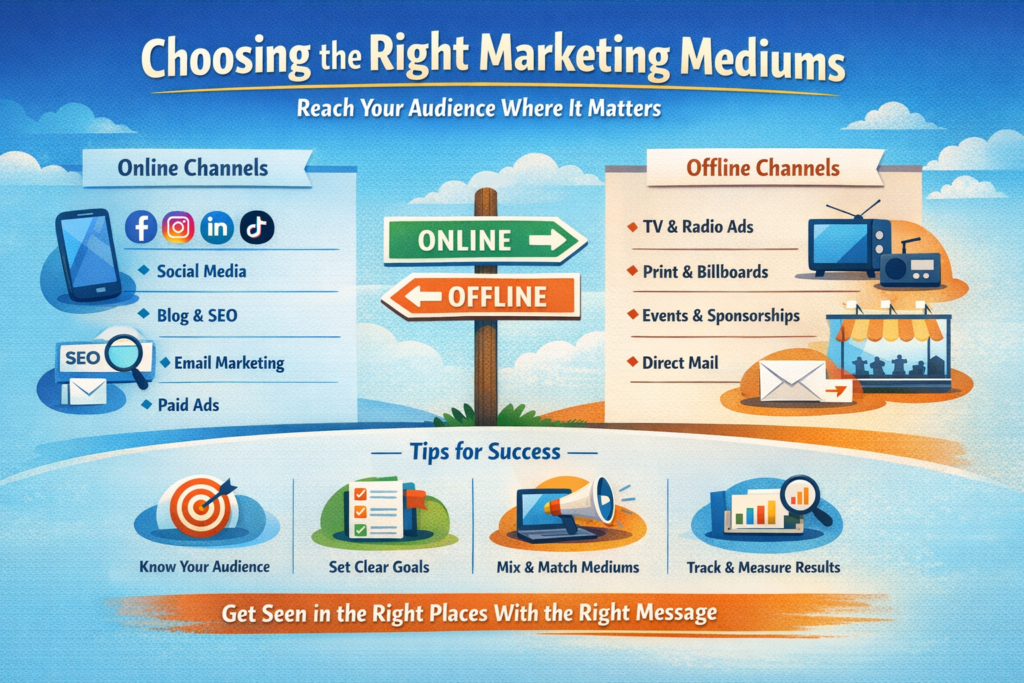
Before we jump into specific channels, it helps to see the big picture. Most marketing mediums fall into two broad buckets:
-
Online (digital) mediums: Social media, websites, blogs, email, search ads, display ads, video platforms, podcasts, etc.
-
Offline (traditional) mediums: TV, radio, print (newspapers, magazines), billboards, flyers, events, trade shows, direct mail, etc.
Do you need both? Not always. But the strongest brands usually blend online and offline to show up where their audience actually lives, works, scrolls, and relaxes.
Social Media: The Everyday Conversation Hub
Social media is often the first medium people think of – and for good reason. Your customers are already scrolling there daily.
Popular social platforms include:
-
Facebook and Instagram for broad consumer audiences
-
LinkedIn for B2B and professionals
-
X (Twitter) for real-time conversations and news
-
TikTok and Reels for short-form video and trends
-
YouTube for search-friendly, long-form video
Why it works: Social media lets you build a relationship, not just push offers. You can share stories, behind-the-scenes content, customer testimonials, and quick tips. It’s like having a 24/7 public chat with your market.
Want a simple example? A local café posting daily coffee specials and customer photos on Instagram is using a social medium to stay top of mind without feeling “salesy”.

Content Marketing & Blogging: Your Brand’s Digital Home Base
If social media is a busy marketplace, your website and blog are your home. Content marketing uses articles, guides, case studies, and resources to attract and educate potential customers.
A blog can help you:
-
Rank in search engines for key topics
-
Build authority in your niche
-
Answer common questions before someone even contacts you
-
Nurture people who are still “just researching”
For instance, a fitness coach writing blog posts like “Best Workouts For Busy Professionals” or “How To Lose Weight Without A Gym” is using the content medium to pull in people actively looking for those answers.
This is where SEO really shines – good, optimized content can bring you traffic for months or even years.
Email Marketing: Direct Access To Your Customer’s Inbox
Email marketing is one of the most underrated but powerful mediums. While algorithms control what people see on social media, your email list is something you truly own.
With email, you can:
-
Send newsletters, offers, and updates
-
Nurture leads with automated sequences
-
Remind people about abandoned carts or unfinished sign-ups
-
Segment your audience based on interests or behavior
Think of email as having a direct line into someone’s personal space. Done right, it feels like a friendly check-in, not spam. Done poorly, it goes straight to the trash.
A simple analogy: Social media is like speaking to a crowd, email is like sending a personal letter.
Search Engines & SEO: Being Found When It Matters Most
When someone types a problem or question into Google, they’re often ready to act. That’s why search is such a powerful marketing medium.
Two main approaches dominate here:
-
Organic search (SEO): Optimizing your website and content to show up in unpaid search results
-
Paid search (PPC): Paying for ads that appear at the top of search pages
SEO involves keyword research, high-quality content, site speed, mobile-friendly design, and earning links. It might take time, but the long-term payoff can be huge.
Imagine a local dentist ranking first for “best dentist near me” – that single position can bring in a steady stream of high-intent patients every week.
Paid Advertising: Fast Visibility Across Multiple Mediums
If you want quick results, paid ads give you speed and reach. You can run ads across several mediums:
-
Search ads (Google, Bing)
-
Social media ads (Facebook, Instagram, LinkedIn, TikTok)
-
Display ads on websites and apps
-
YouTube video ads
Paid ads let you target specific demographics, interests, and behaviors. You can test headlines, images, and offers in real time and scale what works.
Think of paid advertising as turning on a tap: you get traffic as long as you keep paying. Organic channels, in contrast, are more like digging a well – slower to start but sustainable.
Traditional Media: TV, Radio, Print, And Outdoor
Just because we live in a digital world doesn’t mean traditional mediums are dead. Far from it.
Common traditional mediums include:
-
TV commercials for mass reach and brand recognition
-
Radio ads for commuters and local audiences
-
Print ads in newspapers and magazines for specific niches or regions
-
Billboards and outdoor ads for constant, high-visibility impressions
These mediums work especially well when you’re targeting local or broad consumer audiences and want to build trust and familiarity.
Think of a big FMCG brand you know. Chances are you’ve seen them on TV, in stores, and maybe on billboards. That multi-medium presence makes them feel “everywhere”.
Events, Sponsorships, And Experiential Marketing
Some of the most memorable marketing happens offline, face-to-face. Events and experiential mediums help people feel your brand.
These can include:
-
Trade shows and expos
-
Conferences and seminars
-
Local community events
-
Brand sponsorships for sports, music, or cultural programs
-
Pop-up experiences or in-store demos
This medium turns marketing into an experience. People remember how you made them feel long after they forget your tagline.
For example, a tech company hosting a hands-on demo booth at a major conference can create far deeper engagement than a simple online ad.
Choosing The Right Marketing Medium For Your Business
With so many options, how do you pick? You don’t need to be everywhere; you need to be where it matters.
Ask yourself:
-
Where does my audience spend their time?
-
What is my budget and timeline?
-
Do I need quick leads or long-term brand building?
-
Can I consistently create content for this medium?
-
How will I track and measure results?
A B2B SaaS company might lean heavily on LinkedIn, email, webinars, and SEO. A local restaurant might focus on Instagram, Google Maps, local SEO, and flyers. Different goals, different mediums.
Start with 2–4 key mediums, get good at them, and then expand. Think “focused and consistent” instead of “everywhere and overwhelmed”.
Combining Marketing Mediums For Maximum Impact
The real magic happens when your mediums work together like instruments in a band, not solo acts.
Some effective combinations:
-
Social media + email: Use social to grow your following, then invite people to join your email list for exclusive content and offers.
-
SEO + content marketing: Create optimized blogs, guides, and landing pages that bring in search traffic and nurture leads.
-
Offline + online: Promote events online, run QR codes on print materials, and encourage in-store visitors to follow you on social media.
-
Paid ads + organic: Use paid campaigns to test offers quickly, then turn the winners into evergreen content or landing pages.
This integrated approach is often called an “omnichannel” strategy. For your audience, it feels seamless: they see you in multiple places with a consistent message and voice.
Conclusion
At the end of the day, a marketing medium is just a bridge between your brand and your audience. Your job is to choose the bridges that:
-
Reach the right people
-
Fit your budget and resources
-
Match your brand personality
-
Deliver measurable results
You don’t have to master every channel overnight. Start small, stay consistent, experiment, track what works, and double down on the mediums that genuinely move the needle.
In a world where attention is the new currency, the brands that win aren’t always the loudest – they’re the ones that show up in the right places, at the right time, with the right message.