Email drips—also called drip campaigns or drip sequences—are automated series of emails sent to subscribers or leads at predefined intervals or triggered by specific actions. Unlike one-time broadcast campaigns, email drips nurture relationships over time, delivering relevant content at each stage of the buyer journey to move prospects toward conversion.
What Are Email Drips?
An email drip is a pre-written sequence of emails automatically delivered to a subscriber based on:
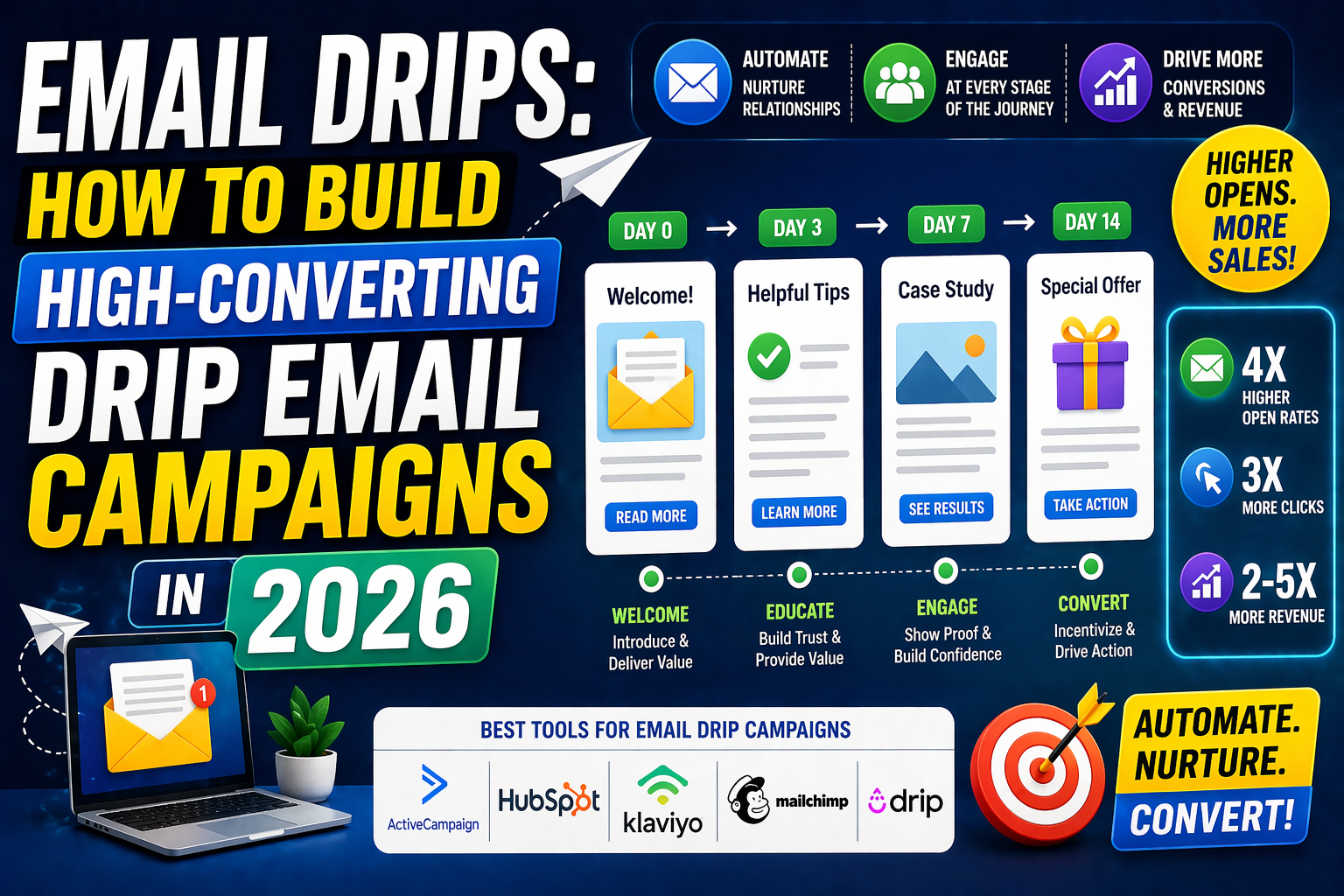
- Time-based triggers: Email 1 immediately on signup, Email 2 after 3 days, Email 3 after 7 days
- Behavior-based triggers: Email sent when a specific link is clicked, a page is visited, or a form is submitted
- Event-based triggers: Triggered by purchases, trial starts, cart abandonment, or account milestones
Types of Email Drip Campaigns
Welcome Drip Series
Triggered when a new subscriber joins your list. Introduces your brand, delivers immediate value, sets communication expectations, and guides the subscriber toward the next desired action. Achieves 4x higher open rates than standard campaigns.
Lead Nurture Drip
A multi-email sequence (typically 5–10 emails over 2–6 weeks) that educates prospects about their problem and your solution, building trust and moving them toward a sales conversation. Common in B2B and high-consideration purchases.
Onboarding Drip
Guides new customers or trial users through product setup, key features, and success milestones. Reduces churn by ensuring customers achieve early value.
Abandoned Cart Drip
E-commerce staple. Triggered when a shopper adds to cart but doesn’t purchase. Typically 2–3 emails reminding them of the cart contents, addressing objections, and offering incentives. Recovers 5–15% of abandoned carts.
Re-engagement Drip
Sent to inactive subscribers who haven’t opened emails in 60–90 days. Attempts to reactivate interest before removing them from your list to protect deliverability.
Post-Purchase Drip
Delivers order confirmation, shipping updates, product usage tips, review requests, and upsell/cross-sell recommendations after purchase.
Building High-Converting Email Drips: Best Practices
Map the Subscriber Journey First
Before writing a single email, map where your subscriber is when the drip starts, where you want them to be at the end, and what information or experience will help them get there.
Keep Each Email Focused on One Goal
Every drip email should have one primary call-to-action. Multiple competing CTAs dilute conversion. Decide: Is this email to educate, to invite a demo, to make an offer, or to share a testimonial?
Personalize Beyond First Name
Use behavioral data, demographic segments, and CRM attributes to personalize content. An enterprise prospect and a solo entrepreneur have different pain points—their drip sequences should reflect that.
Test Subject Lines Systematically
A/B test subject lines across your drip sequences. Small improvements in open rates compound significantly across multi-email sequences.
Monitor Unsubscribes by Email Number
If Email 3 in your sequence consistently drives unsubscribes, that’s a signal to review its content, timing, or messaging. Sequence analytics reveal where you’re losing subscribers.
Best Tools for Email Drip Campaigns
- ActiveCampaign: Industry-leading drip automation with complex conditional logic
- HubSpot: Sequences tool for sales drips; workflows for marketing drips
- Klaviyo: Best for e-commerce drips with deep behavioral triggers
- Mailchimp: Customer Journey builder for straightforward drip sequences
- Drip: Purpose-built for e-commerce email drips with revenue attribution
FAQ
What are email drips?
Email drips (or drip campaigns) are automated sequences of emails sent to subscribers or leads based on time intervals or behavioral triggers. They nurture relationships over time by delivering relevant content at each stage of the subscriber’s journey—from welcome sequences to post-purchase follow-ups.
How many emails should be in a drip sequence?
Welcome drips typically contain 3–5 emails. Lead nurture sequences range from 5–10 emails over 2–6 weeks. Onboarding sequences often span 30 days. There’s no universal answer—the right length depends on your sales cycle complexity and the value of each email in advancing the subscriber toward conversion.
What is the best frequency for email drips?
For B2C welcome and onboarding sequences: daily to every 2–3 days initially, tapering to weekly. For B2B lead nurture: every 3–7 days. Monitor unsubscribe rates carefully—high unsubscribes signal either messaging problems or frequency issues.
What makes a good email drip campaign?
Effective email drips have clear journey mapping, each email focused on one goal, personalization beyond first name, behavioral triggers that respond to subscriber actions, systematic A/B testing of subject lines, and regular analysis of open rates, click rates, and unsubscribes across each email in the sequence.
Conclusion
Well-designed email drips are among the highest-ROI marketing investments available—working automatically, 24/7, to nurture leads and customers through their journey. Start with a welcome sequence, add an abandoned cart flow if you’re in e-commerce, and layer in lead nurture sequences as your content library grows.
Explore VBWebSol’s digital marketing services or contact us.