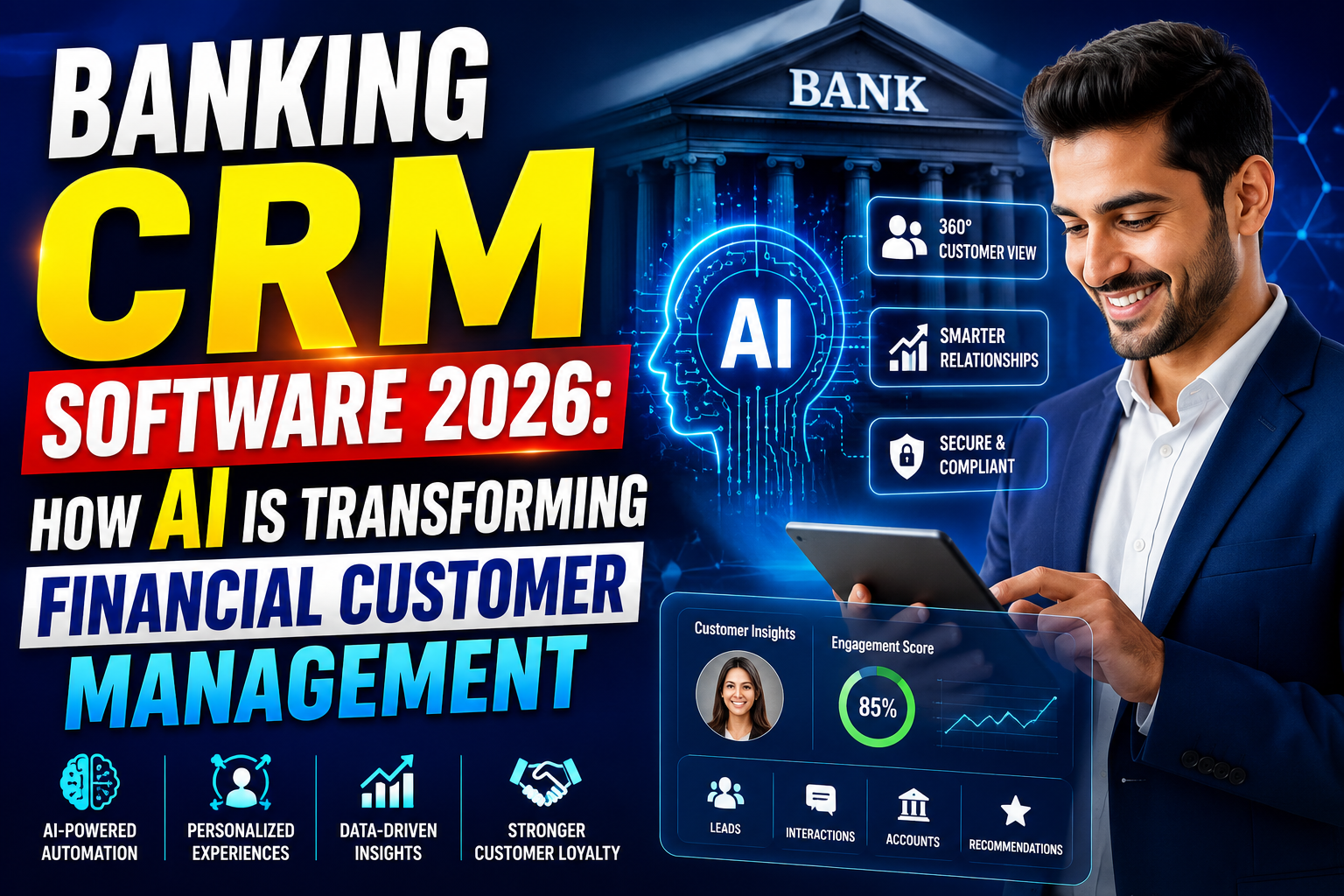
Banking CRM software 2026 is fundamentally changing how financial institutions manage client relationships, ensure regulatory compliance, and deliver personalized financial services. In a world where customers expect instant, personalized, and seamless banking experiences, traditional relationship management methods simply no longer cut it.
3 Today, a CRM is a sophisticated business intelligence engine that can predict which leads are most likely to convert, automatically send personalized messages, generate customer service responses, and analyze millions of data points in real time. For banking institutions,
this translates into unprecedented competitive power.
Why Banks Need CRM Software in 2026
The banking sector faces unique challenges: intense regulatory scrutiny, increasing customer expectations, fierce competition from fintech startups, and the need to manage complex multi-product customer relationships. 891% of businesses report reduced customer acquisition costs after implementing CRM. For banks, this means more efficient branch operations,
fewer missed cross-selling opportunities, and stronger customer retention.
Key Features of Banking CRM Software
1. AI-Powered Customer Segmentation Banking CRM platforms in 2026 use AI to segment customers by wealth tier, product usage, risk profile, and life stage. This allows relationship managers to deliver hyper-personalized financial product recommendations — from mortgage offers to investment products — at exactly the right moment.
2. Loan Pipeline Management Modern banking CRMs include visual sales pipelines specifically designed for loan origination — tracking every stage from application to disbursement,
with automated reminders for missing documents and compliance approvals.
3. Regulatory Compliance & Audit Trails Banking CRM software 2026 includes built-in compliance frameworks for KYC (Know Your Customer), AML (Anti-Money Laundering),
and GDPR. Every customer interaction is logged automatically, creating a complete audit trail for regulatory reviews.
4. Omnichannel Banking Experience
7 Consumers and business buyers alike expect seamless, personalized,
and consistent experiences across multiple channels, including email, social media, websites, mobile applications, live chat,
and customer support platforms. Banking CRM platforms unify all these touchpoints into a single dashboard.
5. Predictive Analytics for Churn Prevention
6 In 2026, CRM systems will forecast future customer behavior using historical data, customer signals, and behavioral patterns — allowing teams to act earlier, smarter,
and with far more confidence. For banks,
this means predicting which customers are about to leave and intervening proactively.
6. Integration with Core Banking Systems Leading banking CRM platforms integrate seamlessly with core banking systems, payment processors,
and financial data providers — giving relationship managers a 360-degree view of every customer’s complete financial profile.
Top Banking CRM Platforms in 2026
- Salesforce Financial Services Cloud — Industry leader with deep AI capabilities
- Microsoft Dynamics 365 for Financial Services — Excellent for large banks
- HubSpot CRM — Best for community banks and credit unions
- Zoho CRM — Cost-effective with strong automation features
Conclusion
Banking CRM software 2026 is not optional for financial institutions that want to compete. From AI-driven personalization and compliance management to loan pipeline tracking and churn prediction — investing in the right banking CRM is the single most impactful technology decision a bank can make this year.